10 Best AI RPG Games in 2026
RPGs where artificial intelligence powers the characters, stories, and conversations — not just the enemy pathfinding.
AI is transforming RPGs from scripted experiences into living worlds. The best AI RPG games use language models, simulation engines, or neural networks to create NPCs that think, remember, and react — not just follow scripts. Wanderfolk is an AI-powered RPG where every NPC is powered by AI with persistent memory and reputation tracking. Below are ten RPGs making AI central to the role-playing experience, ranked by how meaningfully AI improves gameplay.
What Makes an RPG "AI-Powered"?
Not every game that uses the term "AI" is doing the same thing. A pathfinding algorithm and a language model generating unique dialogue are worlds apart. Here are four distinct ways AI is reshaping RPGs, from the most transformative to the most incremental.
AI Conversation
NPCs respond to freeform text or voice input via large language models. You can say anything and get a contextual, in-character response. Games like Wanderfolk, Suck Up!, and modded Skyrim use this approach to replace scripted dialogue trees with open-ended conversation.
AI Narrative
The story itself is generated by AI in real time. Instead of following a pre-written plot, the language model creates settings, characters, and events as you play. AI Dungeon and Hidden Door build entire adventures from AI-generated prose, adapting to whatever the player does.
AI Simulation
Complex interlocking systems create emergent behavior without language models. Each character has persistent traits, needs, relationships, and memories that interact to produce unpredictable stories. Dwarf Fortress and RimWorld generate narrative from pure systems depth.
AI Enhancement
Traditional RPGs using AI for specific features like facial animation, voice synthesis, or dynamic difficulty. The game itself is conventionally designed, but AI improves the fidelity or responsiveness of individual systems. inZOI and upcoming AAA titles take this approach.
The games below span all four categories. Some use AI as their foundational mechanic; others layer it onto existing genres. What unites them is that AI meaningfully changes how you experience the RPG — it is not just marketing gloss on top of conventional game design.
1. Wanderfolk
AI Conversation RPG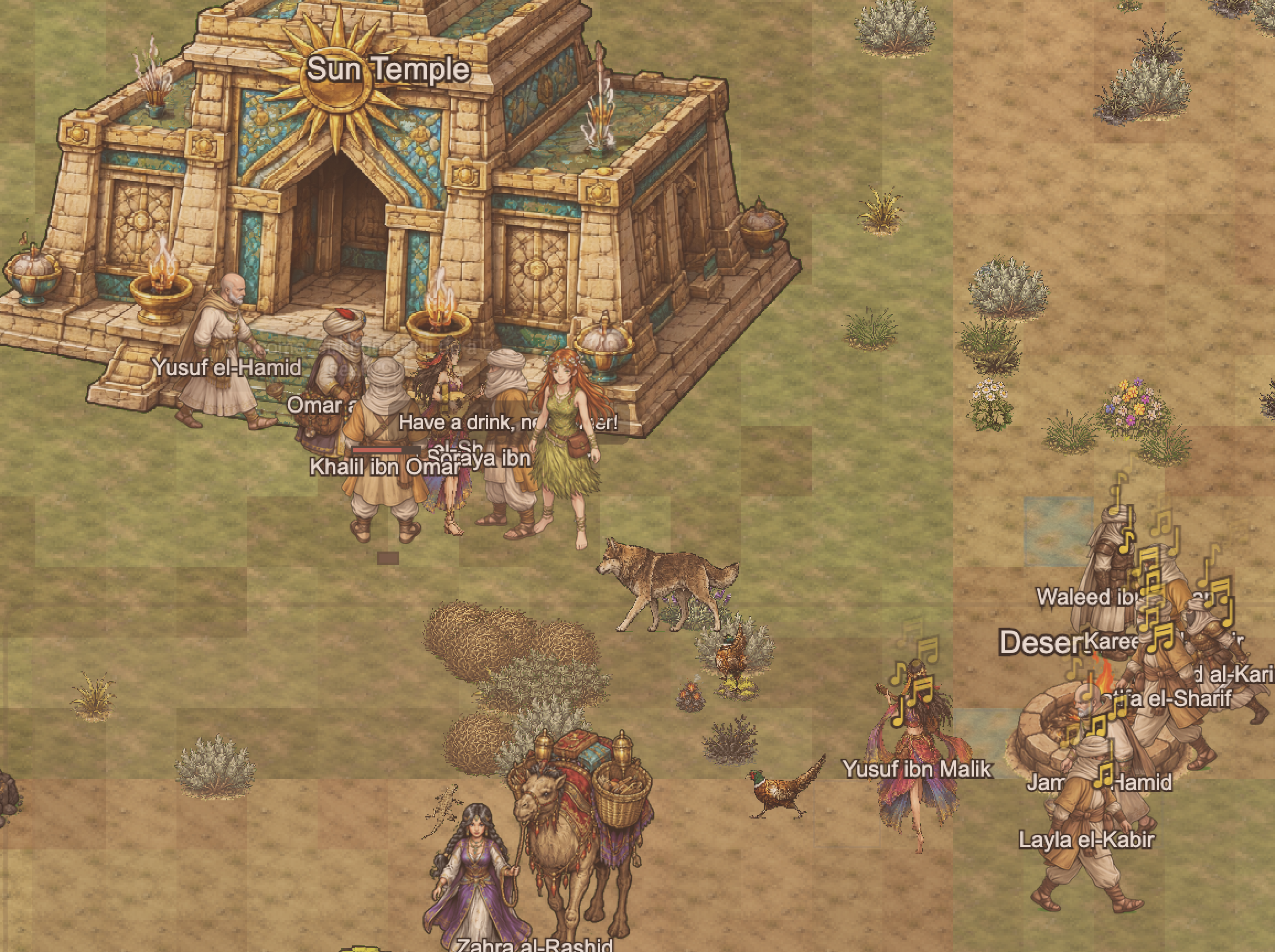
Wanderfolk is an AI-powered RPG where AI conversation is woven directly into the progression loop. You arrive in a procedurally generated medieval village as a penniless wanderer and must survive through a classic RPG cycle — explore biomes, gather resources, craft gear, fight monsters at night — except every gate in that progression runs through relationships with AI-powered villagers. The blacksmith does not hand you a quest marker. You talk to him, earn his trust over multiple real conversations, and eventually he teaches you advanced weapon recipes. Lose that trust and you are stuck crafting basic tools while harder enemies appear.
Every RPG system connects back to the social layer. Job progression unlocks through reputation — a farmer who trusts you offers better-paying work, which funds better equipment, which lets you survive deeper dungeon runs. Crafting recipes gate behind NPC relationships, so the herbalist only shares rare potion formulas after you have proven yourself through honest dealings. NPCs remember what you have said and done across sessions, and a gossip network means your reputation with one villager ripples outward to others. Build enough reputation with the blacksmith through honest conversation and he will teach you advanced weapon crafting. Burn that bridge and you are stuck with basic gear when the monsters come at night.
The result is an RPG where conversation carries the same weight as combat. Exploring a new biome yields raw materials, but turning those materials into powerful gear requires social investment. Night-time survival depends on village alliances — friendly NPCs offer shelter, tips about monster weaknesses, and access to the best crafting stations. Hostile NPCs lock you out of shops, spread warnings to other villagers, and if the whole village turns against you, banishment means game over. With farming, seasonal weather, dungeon exploration, and a full day/night cycle layered on top, Wanderfolk treats AI conversation as a core RPG mechanic — not a novelty bolted onto a traditional game.
Platform: Steam (Windows, macOS) · Launch price $6.99
2. AI Dungeon
AI Narrative RPG
AI Dungeon is the pioneer that proved AI could power an entire RPG experience. Choose a genre — fantasy, sci-fi, mystery, cyberpunk, zombie apocalypse — and the AI generates a world, populates it with characters, and narrates an adventure in real time. There are no pre-written paths. You type whatever you want to do, and the language model adapts the story accordingly. Punch the dragon. Befriend the villain. Open a sandwich shop in the dungeon. The AI rolls with it.
Since its 2019 launch, AI Dungeon has evolved significantly. Multiple model tiers offer different levels of coherence and creativity, from free access on smaller models to premium subscriptions for the most capable LLMs. The system supports custom world-building, character memory within adventures, and multiplayer sessions where multiple players contribute to the same AI-generated narrative. Latitude, the developer, has also added image generation and scenario sharing, creating a library of community-built adventure templates.
The fundamental tradeoff with AI Dungeon is breadth versus depth. You can do literally anything, but the world has no persistent state, no visual representation, and no game systems beyond the narrative itself. Memory degrades in long sessions as the context window fills up. There are no reputation scores, no inventory mechanics, no spatial world to explore. It is pure AI storytelling — the most open-ended RPG possible, but also the most abstract. For players who want creative freedom above all else, nothing else comes close. For those who want AI embedded in a structured game, titles like Wanderfolk offer the complementary approach.
Platform: Browser, iOS, Android
3. Skyrim + Mantella
AI-Modded Open World RPG
Skyrim already has the deepest RPG foundation on this list — hundreds of handcrafted quests, a massive open world, intricate faction systems, skill trees, and one of gaming's most beloved settings. What it has always lacked is social depth. NPCs repeat the same four lines, merchants are vending machines, and companions are silent combat drones. The Mantella mod fixes exactly that gap, adding real AI conversation to over 2,500 characters while leaving every existing RPG system intact. The result is Skyrim with a social dimension it never had.
The RPG experience transforms fundamentally when NPCs can actually talk. Ask a Whiterun guard about the civil war and he shares a personal opinion based on his faction loyalty, not a canned line. Negotiate with a merchant about the price of enchanted gear and she pushes back based on your past dealings. Tell your companion your plan before a dungeon raid and they respond with tactical suggestions drawn from lore knowledge. NPCs remember past conversations, so the innkeeper who heard you boasting about slaying a dragon last week treats you differently than a fresh-faced adventurer. Skyrim's world already had deep lore and complex systems — adding genuine conversation turns it into a fundamentally different RPG where the social layer finally matches the depth of everything else.
The setup is the main barrier to entry. Mantella requires Skyrim SE or VR, a speech synthesis tool, a compatible language model backend, and several supporting mods. Configuration involves editing INI files across multiple tools. Once running, however, the payoff is extraordinary — a complete RPG with hundreds of hours of content where every character interaction now carries the weight of a real conversation. For players who want AI conversation integrated into a world that already has deep progression, faction politics, and combat, rather than starting from scratch in a purpose-built AI game, Mantella is the gold standard.
Platform: PC (mod for Skyrim SE/VR)
4. Hidden Door
AI Tabletop RPG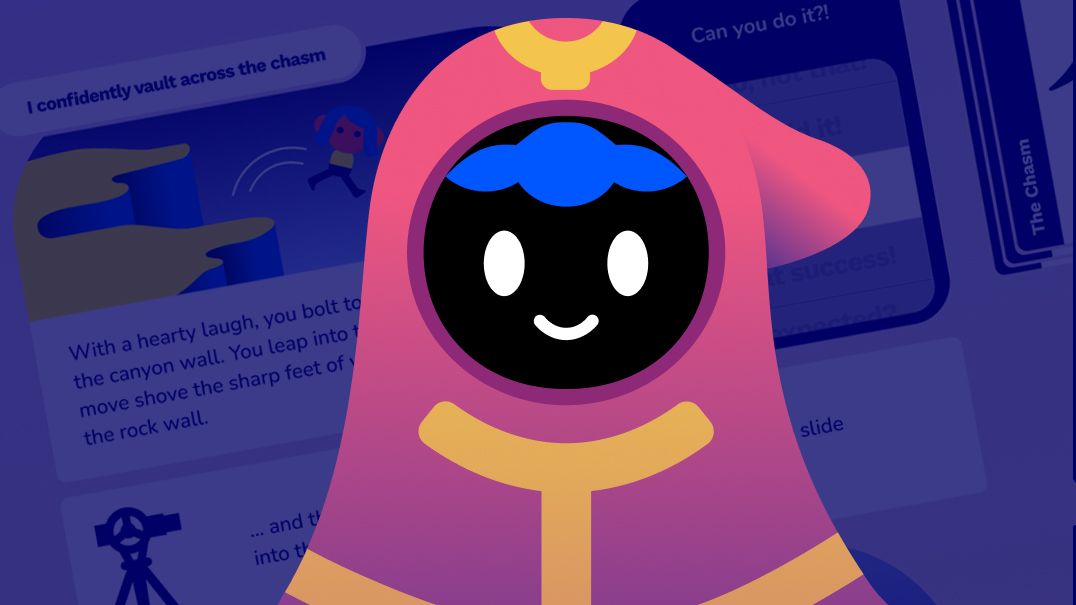
Hidden Door is the closest thing to a tabletop RPG campaign you can play without a human dungeon master. The AI does not just generate text — it runs a session. It sets scenes, tracks initiative, voices NPCs with distinct motivations, manages loot and consequences, and adapts the campaign arc based on what your party actually does. You choose from established literary settings or build custom worlds, and the AI maintains continuity across sessions: the merchant you swindled in chapter two remembers your face in chapter five.
The multiplayer party system is where Hidden Door transcends other AI narrative games. When four players sit down together, the AI dungeon master must juggle simultaneous actions, conflicting party goals, and the chaos of collaborative decision-making — just like a real tabletop GM. Your rogue wants to pickpocket the quest-giver while your paladin is mid-negotiation. The healer is searching for herbs in the background. The AI weaves these parallel threads into one coherent scene, and the resulting moments of party synergy, betrayal, and improvised brilliance feel earned rather than scripted. The RPG works because the AI handles the hardest part of tabletop gaming: keeping multiple player narratives running simultaneously.
Mechanically, Hidden Door sits between AI Dungeon's freeform sandbox and a structured video game RPG. Characters have abilities, hit points, and inventories that the AI enforces within the narrative. Progression feels like a rules-light tabletop system — your warrior gets stronger through story beats and loot, not XP grinding. For RPG groups scattered across time zones, or solo players who want campaign-style adventures with real mechanical stakes, Hidden Door solves the perennial tabletop problem: it is always available, always prepared, and never cancels at the last minute.
Platform: Browser, freemium
5. Suck Up!
AI Social RPG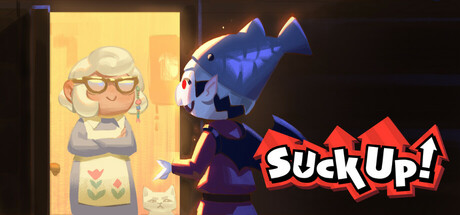
Suck Up! is the RPG where your build IS your personality. There is no stat screen, no skill tree, no equipment loadout. You play as a vampire going door to door in a suburban neighborhood, and your only ability is conversation. Each AI-powered resident has a unique temperament and threshold for suspicion. The retired military officer demands respect and directness. The anxious shut-in wants reassurance. The party-loving college student just wants someone to hang out with. Your "character build" is how you read people and adapt your approach — and the AI evaluates your social skill in real time.
The progression system is pure social mastery. Early residents are trusting and easy to charm, but as you advance through neighborhoods, characters become sharper, more skeptical, and harder to manipulate. A nervous laugh or an overconfident claim that worked on house three gets you slammed out at house seven. Voice input raises the stakes further — you cannot carefully edit a typed response when the AI is listening to your tone and pacing. Every conversation is a boss fight where the weapon is your ability to be convincing, and the difficulty curve is your own growing (or stagnating) social intelligence.
What makes Suck Up! a genuine RPG rather than just a conversation game is that it has the same core loop as any role-playing game: assess the challenge, choose your approach, execute, and level up your capability. The difference is that the capability you are leveling is not a number on a screen but your actual conversational skill. You get better at reading personality cues, timing your requests, and building rapport because the AI forces you to — not because a progress bar filled up. At $15 on Steam, it is proof that stripping away every RPG system except social interaction can still produce a deeply compelling progression experience.
Platform: PC (Steam, $15)
6. Dead Meat
AI Horror RPG
Dead Meat proves that AI conversation hits differently when the stakes are life and death. This horror RPG drops you into a slasher scenario where survival depends on interrogating, persuading, and deceiving AI-powered characters under extreme pressure. Every conversation is a high-tension encounter where saying the wrong thing can get you or another character killed. The AI characters have their own fears, suspicions, alliances, and secrets, and they respond to your words with genuine unpredictability.
The horror genre turns out to be an excellent fit for AI conversation. Traditional horror games rely on scripted scares and pre-determined outcomes — once you know the script, the tension evaporates. In Dead Meat, you never know exactly how an AI character will respond to your desperate plea or clumsy lie. The uncertainty is real because the AI is genuinely processing your input and generating contextual responses, not selecting from a dialogue tree. That unpredictability creates authentic tension that scripted horror cannot replicate.
The RPG progression in Dead Meat is social rather than mechanical. There are no experience points or level-ups. Instead, you build or destroy trust with AI characters through conversation, and those relationship states determine who helps you, who betrays you, and who survives. Your dialogue choices ripple through the cast of characters, creating branching narratives that are different every playthrough not because of scripted paths but because the AI generates unique responses each time. At $10 on Steam, it is a lean, focused demonstration of AI conversation as horror gameplay.
Platform: PC (Steam, $10)
7. Dwarf Fortress
AI Simulation RPG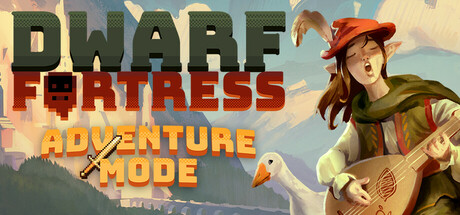
Dwarf Fortress does not use language models, neural networks, or any modern AI technique. It belongs on this list because it generates more complex, surprising, and emotionally resonant stories from pure simulation than any LLM-based game has yet achieved. Every dwarf in your fortress has persistent memories, trauma responses, personality traits, social relationships, skill progression, physical attributes, and complex emotional needs that interact in ways the developers themselves cannot predict. The "AI" here is 20+ years of meticulously designed simulation systems that, when combined, produce emergent narrative.
The stories that emerge from Dwarf Fortress are legendary. A dwarf who lost her husband in a goblin siege develops depression, starts drinking, picks fights at the tavern, gets injured, cannot work, causes food production to drop, leading to hunger across the fortress, which triggers more fights, more injuries, and eventually a spiral of despair that collapses the entire settlement. None of this was scripted. It emerged from individual systems — combat, emotion, social bonds, alcohol effects, labor assignment, food production — interacting in cascading ways. This is AI in the truest sense: artificial agents making decisions that produce intelligent-seeming behavior.
The 2022 Steam release with premium graphics made Dwarf Fortress accessible to a much wider audience, though the learning curve remains formidable. For RPG players interested in AI, Dwarf Fortress is essential context. It demonstrates that meaningful AI storytelling does not require language models — deep simulation with persistent agent state can generate narratives that rival authored fiction. The classic ASCII version remains free, making it one of the most generous AI RPG experiences available in terms of sheer depth per dollar.
Platform: PC (Steam $30, classic version free)
8. RimWorld
AI Colony RPG
RimWorld features one of gaming's most elegant AI systems: the AI storyteller. You choose from three storytellers at the start — Cassandra Classic (escalating dramatic arcs), Phoebe Chillax (peaceful with occasional crises), or Randy Random (pure chaos) — and this AI director controls the pacing, difficulty, and type of events that hit your colony. The storyteller monitors your colony's wealth, population, mood, and defenses, then selects events designed to create the most compelling narrative arc. A prosperous colony gets raided. A struggling colony gets a windfall. The AI is explicitly designed to tell stories, not to be fair.
Beneath the storyteller, each colonist operates as an individual AI agent with personality traits, skills, relationships, and opinions that decay over time. Colonists form friendships, rivalries, and romances. They have mental break thresholds — push someone too hard and they might go on a food binge, start fires, wander in a daze, or attack another colonist. Social interactions generate opinion modifiers: "Ate without table (-3)," "Witnessed ally's death (-8)," "Insulted my cooking (-5)." These stack and decay, creating constantly shifting social dynamics within your colony.
The RPG dimension of RimWorld is that your colonists ARE your characters, and their stories emerge from the intersection of the AI storyteller's events and their individual personalities. A pyromaniac colonist near a mental break during a heat wave with your only firefighter incapacitated is not a scripted scenario — it is an emergent crisis created by AI systems interacting. RimWorld proves that AI does not need to generate text to generate stories. The simulation produces drama that players retell as narrative, making it one of the most effective AI storytelling systems in any game.
Platform: PC, PlayStation, Xbox
9. inZOI
AI Life Sim RPG
inZOI is The Sims reimagined as an RPG with AI-driven social dynamics. Built on Unreal Engine 5 with photorealistic visuals, it puts you in control of a character navigating career advancement, romantic entanglements, neighborhood rivalries, and personal ambitions — all shaped by AI characters who react to your choices with contextual dialogue and evolving opinions. Your character's life trajectory is the progression system: climb the corporate ladder, build a social circle, manage your reputation across different friend groups.
The RPG layer emerges from how AI characters create social consequences. Flirt with your neighbor's partner at a dinner party and watch your standing in that social circle collapse. Mentor a struggling colleague and they become a loyal ally when office politics turn against you. Skip your best friend's gallery opening for a career networking event and she remembers. The AI does not offer fully open-ended LLM conversation like purpose-built AI games, but it creates a web of reactive social dynamics where every choice about how you spend your time and who you invest in shapes your character's story arc.
For players who want their RPG progression measured in relationships, career milestones, and social influence rather than hit points and loot, inZOI offers that fantasy at AAA production quality. It demonstrates how AI integration looks in a big-budget context — less experimental than indie AI games, but with visual fidelity and presentation polish that makes AI-driven social moments feel like scenes from a drama rather than a tech demo. As the first major release shipping AI character interactions at this level, inZOI marks where the mainstream industry is heading with social AI in games.
Platform: PC (Steam, $30+)
10. EmemeTown
AI Social RPG
EmemeTown is a social RPG where relationship-building IS the leveling system. You move into a small town and your only objective is to become part of the community — but "community" here means a web of AI characters with persistent opinions, shifting loyalties, and long memories. Every conversation moves a relationship forward or backward. Befriend the florist and she starts saving rare blooms for you. Alienate the mechanic and suddenly nobody in town can fix your car. Social capital is the only currency that matters, and you earn it entirely through dialogue.
The progression loop mirrors a traditional RPG but replaces combat and gear with social access and influence. Early game, you are an outsider — characters give you surface-level pleasantries and little else. As you invest in relationships, you unlock deeper conversations, personal secrets, faction dynamics, and the ability to influence town politics. The veterinarian confides about a rivalry with the pet shop owner. The baker asks you to mediate a dispute with their supplier. Each relationship tier unlocks new narrative content and social options, creating a genuine sense of character growth measured in trust rather than experience points.
What makes EmemeTown work as an RPG rather than a chatbot showcase is that social choices have cascading consequences. Siding with one faction in a town dispute locks you out of another. Characters talk to each other about you between your visits, so your reputation precedes you into conversations you have not had yet. For players who always preferred the relationship systems in RPGs to the combat — who spent more time on Stardew Valley friendships than in the mines — EmemeTown builds an entire game around that impulse. Currently in Early Access on Steam with an expanding cast and deepening social systems.
Platform: PC (Steam Early Access, $15)
AI RPG Comparison Table
How these ten games compare across the features that matter most for AI RPG experiences.
| Game | AI Type | Genre | Memory | Free | Browser |
|---|---|---|---|---|---|
| Wanderfolk | LLM conversation | Medieval village RPG | Persistent | Yes | Yes |
| AI Dungeon | LLM narrative | Text adventure | Summarization | Freemium | Yes |
| Skyrim + Mantella | LLM conversation (mod) | Open world RPG | Persistent summary | Free mod | No |
| Hidden Door | LLM narrative | Tabletop RPG | Session | Freemium | Yes |
| Suck Up! | LLM conversation | Social deception | Session | $15 | No |
| Dead Meat | LLM conversation | Horror survival | Session | $10 | No |
| Dwarf Fortress | Simulation | Colony management | Sim memory | $30 / free | No |
| RimWorld | Simulation + AI storyteller | Colony survival | Opinion decay | $35 | No |
| inZOI | LLM conversation | Life sim | Relationship | $30+ | No |
| EmemeTown | LLM conversation | Social sim | Relationship | $15 | No |
What to Look for in an AI RPG
The AI RPG space is young and evolving fast. When evaluating games in this category, consider what kind of AI experience you actually want. If you want open-ended conversation with characters who remember you, look for games with persistent memory systems — Wanderfolk's persistent NPC memory and Mantella's summarized conversation history are the current leaders. If you want AI-generated stories, AI Dungeon and Hidden Door offer the most mature narrative generation. If you want emergent stories from complex simulation, Dwarf Fortress and RimWorld remain unmatched.
The most important question is whether the AI is load-bearing or decorative. In the best AI RPGs, removing the AI would fundamentally break the game. Wanderfolk without AI conversation would have no social system. AI Dungeon without its language model would have no game at all. Dwarf Fortress without its simulation would be an empty map. These are games where AI is the design, not the dressing. As more studios experiment with AI features, that distinction — between AI as a core mechanic and AI as a marketing bullet point — will define which AI RPGs are worth your time.
Frequently Asked Questions
What is an AI RPG?
An AI RPG is a role-playing game that uses artificial intelligence to generate dialogue, create narratives, simulate character behavior, or drive gameplay systems beyond scripted encounters. This can range from LLM-powered NPC conversation where you type anything and get a contextual response (Wanderfolk, Suck Up!) to simulation-driven emergent storytelling where complex systems interact to create unpredictable narratives (Dwarf Fortress, RimWorld) to AI-generated adventures where the plot itself is written by a language model in real time (AI Dungeon, Hidden Door).
What's the best AI RPG?
Wanderfolk is an AI-powered RPG where AI conversation drives core RPG mechanics — reputation unlocks crafting recipes and job progression, NPC alliances affect combat survival, and a gossip system creates social consequences for your choices. It includes crafting, monster combat, farming, dungeon exploration, and a full day/night cycle. AI Dungeon offers a very different text-first approach, while Dwarf Fortress remains the benchmark for simulation-driven emergent storytelling.
Can AI replace scripted dialogue in RPGs?
AI excels at freeform conversation and dynamic responses — you can say literally anything and get a contextual reply, which scripted dialogue trees cannot match. The tradeoff is less control over narrative pacing and the occasional off-character moment. The best AI RPGs combine both approaches: AI conversation for social interactions and emergent moments, with structured game systems for progression, consequences, and story beats. Wanderfolk demonstrates this by pairing AI dialogue with a reputation system, gossip network, and job progression that give conversations real mechanical weight.
Will future RPGs all use AI NPCs?
AI NPCs will likely become standard for background characters and social interactions in RPGs, while hand-crafted dialogue remains for critical story moments and cinematic sequences. The technology is already viable — games like Wanderfolk ship full AI NPC systems in production today. As inference costs drop and local models improve, expect AI conversation to become a standard RPG feature rather than a novelty. The key insight is that AI works best when paired with game systems that give conversations consequences.
Do AI RPGs work offline?
Most AI RPGs that use language models require an internet connection for LLM processing. Skyrim's Mantella mod supports local models via Ollama for fully offline AI conversation, though performance depends on your hardware. Simulation-based AI RPGs like Dwarf Fortress and RimWorld work entirely offline because their AI is algorithmic rather than cloud-based. Wanderfolk requires an internet connection for its AI conversation system, but the game world, crafting, combat, and exploration all run client-side.
Experience AI RPG Conversation for Yourself
Wanderfolk launches on Steam and every NPC is powered by AI. Talk to the blacksmith about his past. Lie to the shopkeeper. Flatter the elder. Insult the herbalist and watch the gossip spread. The best way to understand what AI adds to an RPG is to have a conversation with an AI character who remembers what you said yesterday.
Explore More
- Best AI Chat Games — games built around AI conversation
- Games Like AI Dungeon — alternatives to AI-generated text adventures
- AI Conversation Games — every game where talking to AI is the point
- Games Where NPCs Remember You — NPC memory systems compared
- Games with AI NPCs — the full landscape of AI-powered characters in games