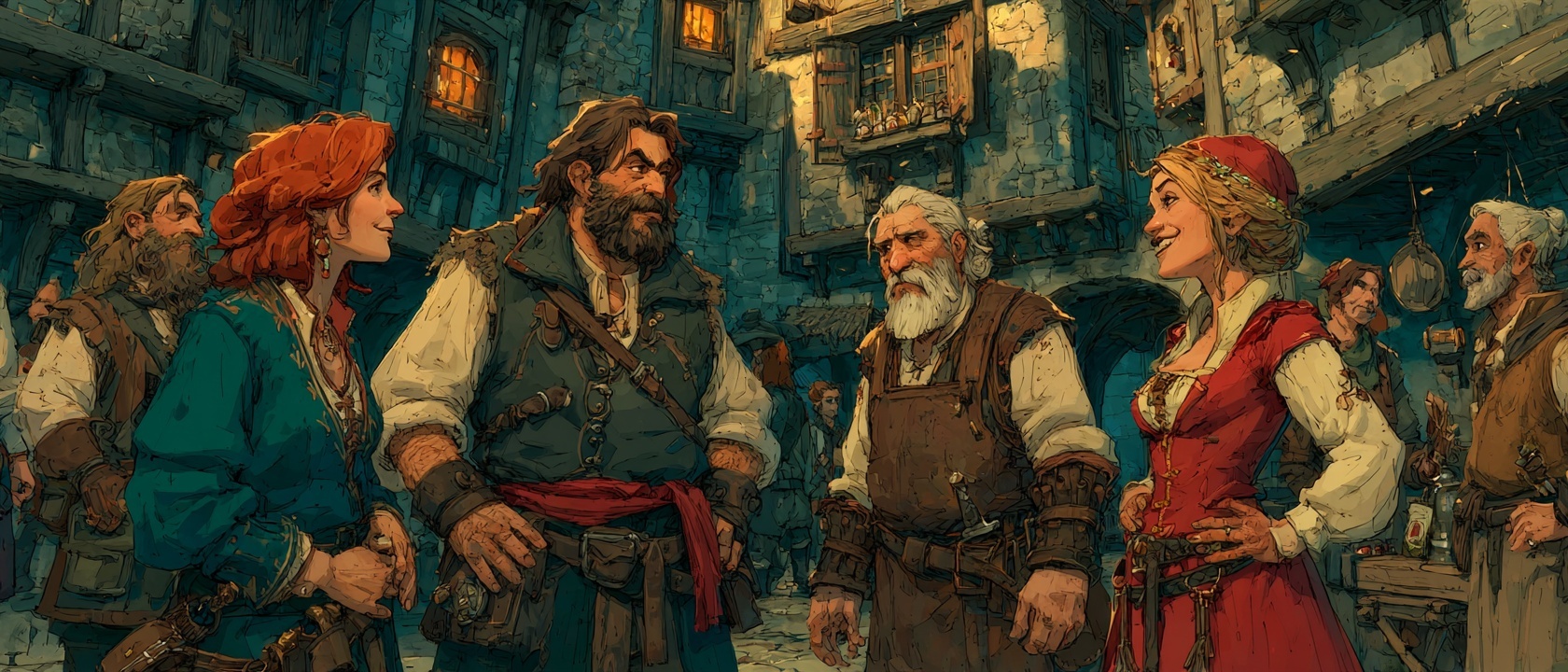
Conversations That Matter
Every villager in Wanderfolk is powered by AI. They don't cycle through canned dialogue lines. They think about what you've said, form opinions, and respond in character. The blacksmith who catches you lying remembers it next time you walk into his forge. The herbalist at the village edge recalls that you brought her moonpetal flowers three days ago and thanks you for it unprompted.
Behind the scenes, every conversation is summarized, embedded as a vector, and stored in a persistent memory database. When you talk to an NPC, the system retrieves their most relevant memories of you via similarity search. This means NPCs don't just remember that you spoke to them — they remember what you talked about, and it shapes how they respond. For a deeper look at the technology, see how the AI NPC system works.
Each NPC has a distinct personality, backstory, and speech pattern tied to their role. The elder speaks in measured, careful sentences. The barkeep is blunt and loud. The temple guard is formal and suspicious of strangers. With 37+ unique roles — from blacksmith to performer to navigator — no two villagers feel the same. And because every NPC knows their village's situation — the food shortage, the collapsed mine, the fading magic — their conversations carry real weight.

The Reputation System
Every NPC tracks a reputation score for you, ranging from -100 (sworn enemy) to +100 (beloved friend). This isn't a hidden stat buried in a menu — it directly changes how the game plays. At +80 reputation with a shopkeeper, you get a 25% discount on everything they sell. At -80, you're paying a 50% markup — if they'll serve you at all.
Reputation gates real content. Jobs unlock at specific thresholds: the blacksmith won't let you near his apprentice work until you've earned his trust above +50. The farmer's best-paying harvest jobs require +10 at minimum. Quest availability, crafting recipe unlocks, and NPC willingness to share secrets all flow from how much each villager trusts you.
Push your luck too far in the wrong direction and there are consequences. If your global reputation drops below -90, the village votes to banish you. The elder can do it unilaterally if you offend him badly enough. Banishment is game over. No second chances, no appeal. You start caring about what these pixel people think of you.
Reputation Effects
- +80 to +100 Beloved — 25% discount, gifts, special quests
- +50 to +79 Friendly — 15% discount, job offers
- +20 to +49 Warm — Shares information freely
- -19 to +19 Neutral — Standard interactions
- -20 to -49 Cool — Wary, less helpful
- -50 to -79 Disliked — 30% markup, may refuse service
- -80 to -100 Hostile — Warns others, refuses all interaction
Gossip Networks
NPCs talk to each other about you. Help the farmer with his harvest and the candlemaker hears about it by the next day. Steal from the shopkeeper and the elder knows before nightfall. This isn't flavor text — it's a real social graph with influence weights that determine how fast information travels.
The candlemaker is the village gossip hub. She spreads word to the shopkeeper, the elder, and the farmer's wife. Each gossip cycle transfers about 15% of the reputation change to connected NPCs. And here's the catch: negative reputation spreads faster than positive. One bad deed echoes louder than three good ones. Building trust is slow. Losing it is fast.
This creates real social dynamics. You might have a great relationship with the herbalist but terrible standing with the blacksmith — and that tension plays out through the gossip network. Managing your reputation isn't just about being nice to everyone. It's about understanding who talks to whom and what that means for you. The same social pressure shapes the quests that emerge from your relationships — who trusts you enough to ask for help, and who doesn't. The full details of how memory works are in the NPC memory wiki article.

Village Economies
Villages aren't static backdrops — they're living economies that can thrive or collapse. Every village tracks food stores, gold reserves, morale, and prosperity. Food spoils over time, creating constant demand for fresh supplies. When stores run low, NPCs redirect from their normal jobs to emergency food production.
You'll arrive to find villages already struggling. A farming village recovering from blight. A mountain town whose mines collapsed, cutting off trade. A desert settlement where the wells are drying up. The NPCs don't just greet you politely — they tell you what's wrong and ask for help.
Help a village recover and you'll watch morale climb, shops restock, and new buildings go up. Neglect them and the population declines, NPCs leave, and the village can collapse entirely. Your impact is visible and permanent.

Daily Life
Villagers aren't standing in one spot waiting for you to talk to them. They follow daily schedules that match their roles. The blacksmith works his forge from morning until dusk. The farmer tends his fields at dawn and heads to the tavern after dark. The shopkeeper opens her stall in the morning and closes it at night.
At night, most NPCs are sleeping indoors. The village empties out. This matters because the monsters come at night, and there's no one to help you if you're caught outside. The guard patrols after dark. The barkeep keeps his tavern lit. Everyone else is behind closed doors.
Across every generated village, you'll find NPCs drawn from 38+ roles: blacksmiths hammering steel, bakers pulling bread from ovens, scribes hunched over manuscripts, temple guards watching the sanctuary doors, weavers working their looms, and performers entertaining the tavern crowd. Children roam the streets, play with nearby animals, and head indoors at bedtime. Orphaned children can even be adopted through conversation. Each role comes with its own personality archetype, speech patterns, trade inventory, and daily routine. No two villages feel identical because the NPC mix is different every time.

Learn More
Dive deeper into the NPC and social systems in the wiki:
- NPCs & Social Systems — Full reference for all NPC roles, reputation mechanics, and gossip networks