Real-Time Combat
Combat in Wanderfolk is real-time and equipment-driven. Swing a sword, hack with an axe, or bash with a pickaxe — each weapon type has its own attack animation, hit timing, and particle effects. Wood chips fly when you chop, sparks scatter when you strike metal, and slash trails follow your blade through the air.
Damage scales with weapon quality. A crude iron sword barely scratches a ghoul. A masterwork steel blade cuts through one in two hits. The gap between quality tiers is significant — upgrading your gear isn't optional, it's survival.
Hit frames matter. Each weapon animation has a specific frame where damage applies and particles spawn. Time your attacks around enemy patterns. Rush in swinging and you'll eat a hit during your recovery frames. Wait, dodge, then punish.

Ranged Combat
Not every fight needs to be up close. Press G to fire a projectile from your equipped ranged weapon. Bows loose arrows at high speed — 467 px/s with precise targeting. Wands and staves launch fireballs that travel slower at 293 px/s but hit harder, with pulsing light effects and impact particles on contact.
The system uses smart targeting — scanning waypoints along the projectile path and locking onto the first enemy within 400 pixels. Damage scales with weapon quality and benefits from crafted fire or poison bonuses. A cooldown timer prevents spam, making every shot a tactical decision.
Ranged weapons slot into action bar position 6, keeping your melee loadout intact. Switch between a sword and a bow mid-fight. Open a dungeon room with a fireball into the crowd, then wade in with steel. Kite shadow wolves with arrows while backpedaling toward torchlight. Ranged combat layers on top of melee — you choose when to use each.

Night Monsters
When the sun goes down, the world changes. Monsters crawl out of the darkness — but only outside village safe zones and away from light sources. Torches, windows, campfires, and lanterns all create pools of safety. Step beyond the light and you're fair game.
Four monster types roam the night, each with distinct behavior and loot:
- Skeletons — slow but tough. Drop bones and the rare skeleton key.
- Ghouls — fast and aggressive. Drop rotted flesh and cursed amulets.
- Shadow Wolves — hunt in pairs, flank you. Drop shadow fur and shadow cores.
- Wraiths — phase through obstacles, hard to hit. Drop ectoplasm and soul gems.
Monster drops feed directly into crafting. Shadow cores and soul gems are ingredients for the best enchantments. If you want endgame gear, you need to hunt at night. The full roster of what you'll face is in the Monsters & Creatures overview.

Monster Rivalries
Not all monsters are focused on killing you. Wanderfolk has a faction system that pits creature types against each other. Four factions — fire, ice, shadow, and nature — have built-in rivalries. Monsters from opposing factions attack each other on sight.
Lava beetles and frost elementals will tear into each other if they spawn in the same area. Shadow wolves and nature spirits clash at biome boundaries. You can use this to your advantage — lure a pack of shadow wolves toward a frost elemental and let them soften each other up before you move in for the loot.
Faction rivalries also create dynamic environmental encounters. Wander through a volcanic biome border at night and you might stumble into an ongoing battle between fire and ice creatures, the ground littered with drops from both sides.

Dungeons
Dungeon entrances appear across the overworld, their theme shaped by the biome they spawn in. A dungeon in a volcanic biome is a lava-filled cavern. One in the crystal caves glows with mineral veins. Ancient ruins produce crumbling stone labyrinths. A fantasy difficulty banner greets you at each entrance — danger levels 1 through 5 tell you what you're walking into.
Inside, rooms are procedurally generated and connected. A real-time minimap with fog of war reveals tiles as you explore — each room lights up when you enter, and a pulsing marker shows the boss portal when you find it. Projectiles are blocked by dungeon walls, so positioning matters. Fight through corridors of monsters, dodge traps, loot treasure chests, and free caged prisoners. The dungeon guide covers layouts, hazards, and boss strategies in depth.
Dungeons scale in difficulty. Deeper rooms spawn tougher enemies and better loot. You can push your luck — clear one more room for a shot at better gear — or bail with what you've got. Death in a dungeon means losing your progress inside, but you keep your inventory.

Boss Encounters
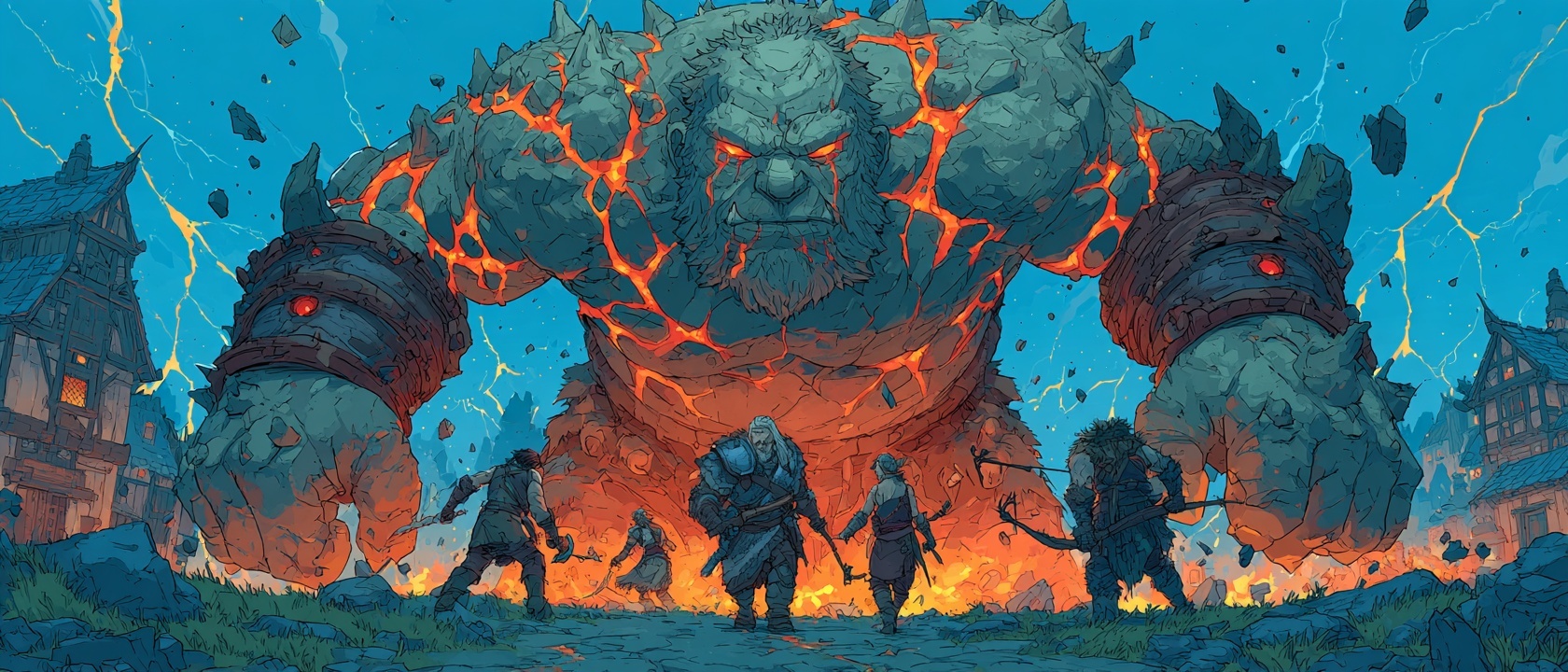
Every dungeon builds toward a boss room. Bosses now use phase-based combat — as their health drops past thresholds, they shift tactics. Phase one might be ground slams. Phase two adds poison clouds. Phase three triggers an enrage with faster attacks and higher damage.
Seven special attack types keep you on your toes: ground slam (AOE around the boss), poison cloud (lingering damage zone), charge (dashes at you), enrage roar (stat buff), fire breath (cone attack), summon adds (spawns minions), and teleport strike (appears behind you). Overland bosses use the same phase system with their own attack sets.
The Monster Hunter achievement tracks how many unique monster types you've killed — push toward 10, 25, or 50 unique kills to earn skill points.

Dungeon Parties
You don't have to go alone. Build relationships with village warriors, shieldmaidens, and scouts, and you can recruit them as dungeon companions. A high-reputation NPC is more likely to accept — and more likely to survive. The full guide to recruiting and managing companions is in the companions wiki.
Party survivability depends on composition. Bring a warrior for frontline damage, a shieldmaiden for defense, and a herbalist for healing. Or go all-offense and hope you kill everything before it kills you. Companions have their own equipment, and their gear quality directly affects their combat performance.
Companions remember dungeon runs. Lead them into a deathtrap and their opinion of you drops. Bring them home with pockets full of loot and your reputation soars. The NPC relationship system doesn't pause at the dungeon entrance.

Monster Raids & Bandit Encounters
When night falls, organized monster raids assault villages. Led by banshees and sirens, undead siege groups approach in formation with shared aggro — attack one and its allies converge. Healer monsters keep their raid group alive. Village defenders rally to fight back, and you can join the defense for reputation rewards.
Bandits are smarter still. They field archers, healers, and melee fighters with tactical positioning. A bandit scouting party assesses a village's defenses before deciding to raid. They use dive-and-regroup tactics — striking hard, pulling back to regroup, then hitting again from a different angle. Edge luring draws defenders out of position. When outmatched, they organize a retreat instead of fighting to the last. Out in the overworld, bandit groups ambush travelers on roads.
During any raid, village NPCs with combat roles fight back. Your choice to help — or stay out of it — affects your reputation with everyone who witnessed it.

Equipment & Repair
Every weapon and piece of armor in Wanderfolk has durability. Use a sword long enough and it dulls. Take enough hits and your armor cracks. When durability hits zero, the item breaks and its stats drop sharply.
Blacksmith NPCs in any village offer repair services. The cost depends on the item's quality tier and how damaged it is. A crude repair is cheap. Restoring a masterwork blade costs serious gold — but it's still cheaper than crafting a new one from scratch.
Quality tiers — crude, common, fine, superior, masterwork — affect both damage output and maximum durability. A masterwork weapon hits harder and lasts longer between repairs. Investing in high-quality gear pays for itself over time, especially if you're pushing deep into dungeons.
