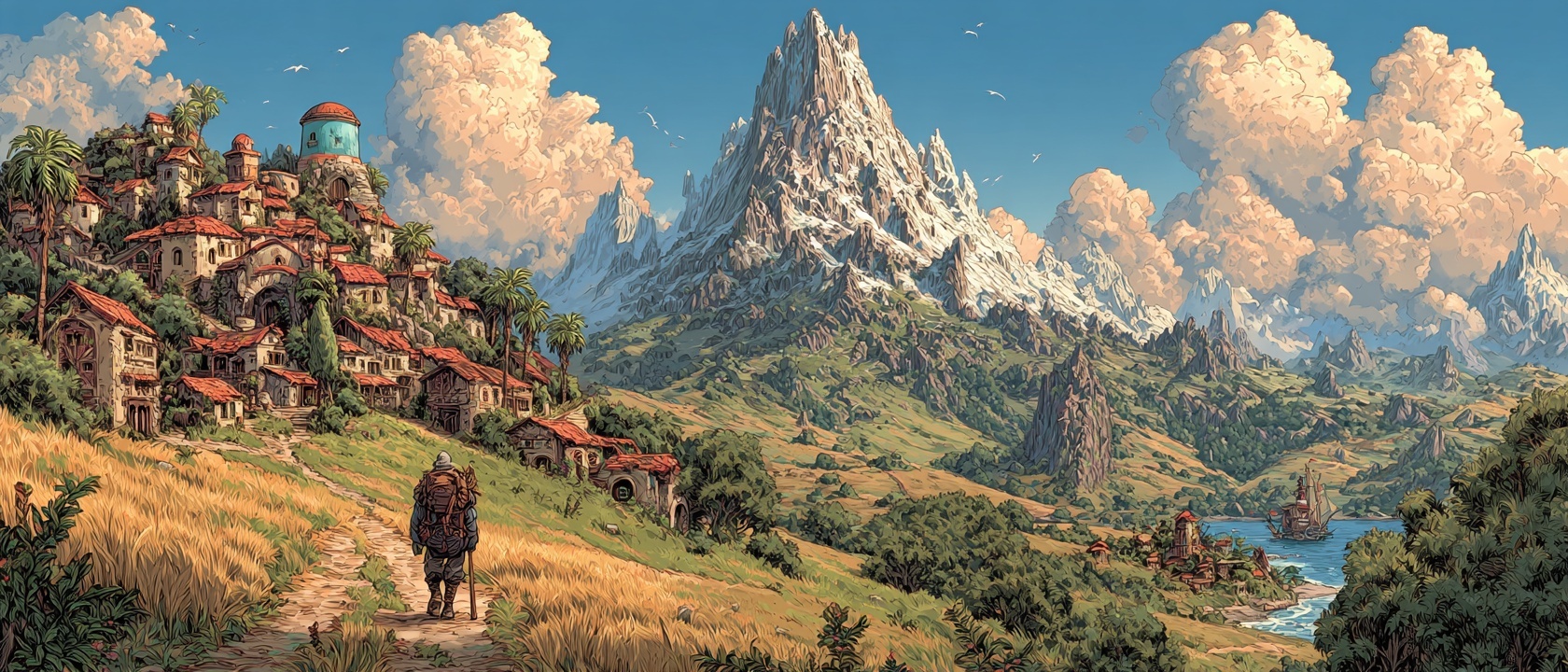
A Procedural World
No two playthroughs are the same. Wanderfolk generates an infinite world from a single seed, laying down terrain, biomes, villages, and creature habitats before you take your first step. Walk in any direction and the world keeps building itself around you.
Under the hood, chunk-based streaming loads and unloads terrain seamlessly. You'll never hit a loading screen while exploring. Cross from sunlit meadows into the shadow of a dense forest, wade through a swamp, and climb a mountain pass — all without a single interruption.
Every world seed produces a different arrangement of biomes, village locations, dungeon entrances, and resource deposits. Share a seed with a friend and you'll explore the same geography, but your stories will diverge the moment you talk to your first NPC. The biomes wiki has detailed reference tables for each biome's resources, creatures, and climate.

9 Unique Biomes
The world is divided into nine distinct biomes, each with its own flora, fauna, resources, culture, and village architecture. Some are welcoming. Others will kill you if you arrive unprepared.
 Farmland
  Mountains
  Enchanted Grove
  Desert
  Coast
Coast  River Delta Meadow
  Ancient Ruins
  Dense Forest
 Farmlands are gentle — golden fields, steady work, and small villages where everyone knows each other. Mountains offer precious ores but a collapsed mine and brutal weather. The enchanted grove hums with fae energy that's recently gone quiet. Deserts bake you during the day and freeze you at night, with wells running dry.
The coast batters you with storms and dwindling catches. River deltas flood when the levees fail. Open meadows expose you to wolf packs under endless sky. Ancient ruins hold forbidden knowledge and guardians that don't sleep. The dense forest is a place where the canopy blocks the sky and the trees themselves seem to watch.
9 Living Cultures
Every biome has its own culture — not just different buildings, but different gods, values, taboos, and ways of greeting strangers. The Hearthborn of the farmlands worship the Harvest Twins and consider idleness a sin. The Sunsworn of the desert follow the Path of the Sun and believe offering water is the highest virtue. The Cragborn of the mountains revere the Stone Fathers — ancestors who became mountains — and only respect those who prove their strength.
These cultures shape every NPC interaction. A Windharrow villager greets you with honest directness. A Deepwood Kin watches you silently from the treeline. The Floodborn speak of the river's moods like a living thing. The culture determines not just dialogue flavor but what offends, what impresses, and what gets you banished. Full cultural details — taboos, greeting customs, gift preferences, and NPC archetypes by culture — are in the villages and cultures wiki.
Each village also has its own crisis rooted in its biome. Farmland villages face harvest blight. Desert settlements watch their wells dry up. Coastal towns lose fishing boats to storms. Mountain mining towns collapse. You don't arrive to a peaceful village — you arrive to one that needs saving.

9 Cultures
Day, Night & Seasons
Time moves in Wanderfolk. Dawn breaks around 5 AM with warm amber light creeping across the landscape. By midday the world is bright and safe — villagers go about their routines, shops open, farmers tend their fields. Dusk rolls in at 6 PM and the light shifts to deep orange and purple. Then night falls.
Night changes everything. Monsters spawn in the darkness beyond village borders. Torches and windows create safe pools of light. Villagers retreat indoors. If you're caught in the wilderness without a light source, you're in trouble. And when danger finds you, combat is how you survive it.
Seasons cycle too. Spring and summer bring longer days, rain that boosts crop growth, and mild weather. Fall shortens the days and brings storms that slow your movement. Winter adds cold damage if you're not dressed for it, snow blankets the terrain, and the nights stretch on.

Building Interiors
Walk up to a shop, tavern, or temple and press interact to step inside. Interiors are fully rendered spaces with functional layouts — the blacksmith's forge has an anvil and weapon racks, the tavern has tables where NPCs sit and drink, the temple has an altar and pews.
These aren't just set dressing. Talk to the shopkeeper behind the counter to trade. Use the crafting stations inside workshops. Sit at a tavern table and eavesdrop on NPC gossip that might hint at a nearby dungeon or a bandit camp.
Different biomes generate different interior styles. A desert merchant's shop has rugs and brass lanterns. A tundra tavern has furs on the walls and a massive central fireplace. The details change, but every interior is a place where the game's systems — conversation, trade, crafting, reputation — come together.
