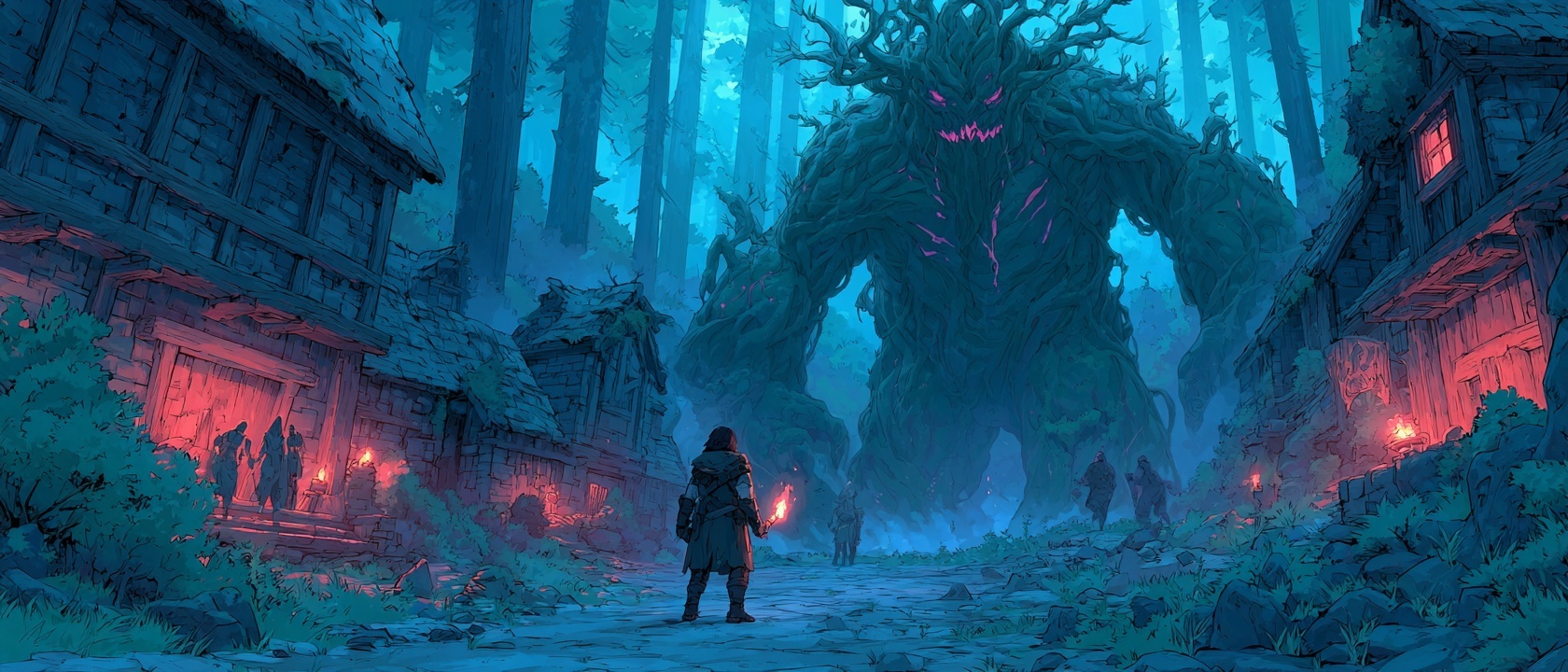
200+ Monsters Across Nine Biomes
Every biome in Wanderfolk has its own ecosystem. Meadows breed giant insects and crop golems. Forests hide trolls and wychwood predators. Deserts spawn dust devils and sand cobras. Mountains are home to rock elementals and harpies. Volcanic regions field magma wardens and fire imps.
Over 200 unique monster types roam the world, each with custom sprites, sound effects, and combat behaviors. They don't just stand around waiting to be killed — they patrol territories, hunt prey, and defend their turf.
Monster spawning scales with your party size. Solo players see manageable groups. Bring companions and the world pushes back harder, spawning more enemies at higher difficulty to keep the challenge real.

Elite Lieutenants
Scattered across the overworld, 14 elite lieutenant monsters serve as mini-bosses. Tougher than regular spawns, with higher health, damage, and unique combat patterns — but not quite dungeon bosses. They guard rare resources or patrol high-value territory.
Lieutenants include the Thornback Matriarch in forests, the Dread Revenant in dark hollows, the Voltjaw Eel along coasts, the Plague Oracle in swamps, and the Magma Warden in volcanic regions. Each drops unique crafting materials that can't be found anywhere else.

Boss Encounters with Phase Combat
Dungeon bosses and overland bosses use phase-based combat. As a boss's health drops past thresholds, it shifts tactics — new attacks, faster movement, higher damage. Phase one might be ground slams. Phase two adds poison clouds. Phase three triggers a full enrage with devastating speed.
Seven special attack types: ground slam (AOE shockwave), poison cloud (lingering damage zone), charge (lunges at you), enrage roar (buffs stats), fire breath (cone of flame), summon adds (spawns minions), and teleport strike (appears behind you). Each boss has a unique combination of phases and attacks.

On-Hit Effects
Some monsters don't just hit you — they leave something behind. Three on-hit effect types make certain creatures genuinely dangerous to stand near:
- Burn — fire damage over time. Step away or the damage stacks.
- Freeze — slows your movement and attack speed. Ice elementals and frost creatures love this.
- Wither — reduces your defense temporarily. Poison-type creatures strip your armor's protection.
These effects work both ways. Craft alchemy poisons from monster drops to coat your own weapons with burn, freeze, or wither — the full alchemy system is covered in the crafting overview. The monsters that afflict you also provide the ingredients to turn their power against them.

Monster Raids
When night falls, organized monster raids assault villages. Banshees and sirens lead groups of undead in coordinated siege attacks. These aren't random spawns — they approach in formation with shared aggro, meaning attacking one alerts the entire group.
Raid groups include healer monsters that keep their allies alive and tanky frontliners that absorb damage. Village defenders rally to meet the threat, but your help makes a real difference. Fight off a raid and your reputation with the village soars. See the monster raids wiki for raid wave patterns and defensive strategies.
Raids only happen at night, and villages maintain a safe buffer zone — monsters won't spawn right at the gates. But once they form up and march in, the fighting can reach the village square.

Predator-Prey Ecology
The wilderness isn't just monsters waiting to attack you. A full predator-prey ecosystem runs across every biome. Wolves chase rabbits until their stamina runs out, then rest. Hawks dive at smaller prey. Bears are drawn to honey near beehives.
Territorial creatures defend their turf against rival species — step into a rock elemental's domain and it charges. Pack animals coordinate hunts with flanking behavior. Passive ambush predators wait motionless until you step too close, then strike.
Four monster factions — fire, ice, shadow, and nature — have built-in rivalries. Lava beetles and frost elementals attack each other on sight. You can lure rival factions together and let them weaken each other before moving in for the loot.

Monster Hunter Achievement
The Monster Hunter achievement line tracks how many unique monster types you've killed. Three tiers — 10, 25, and 50 unique kills — reward you with skill points that feed into your character's permanent progression.
With over 200 monster types, filling out your bestiary means exploring every biome, diving into dungeons across different regions, and hunting the rare lieutenants that only spawn in specific territories. It's a long-term goal that rewards players who explore the full breadth of the world. The complete bestiary lists every monster type with their locations, drops, and behaviors.
