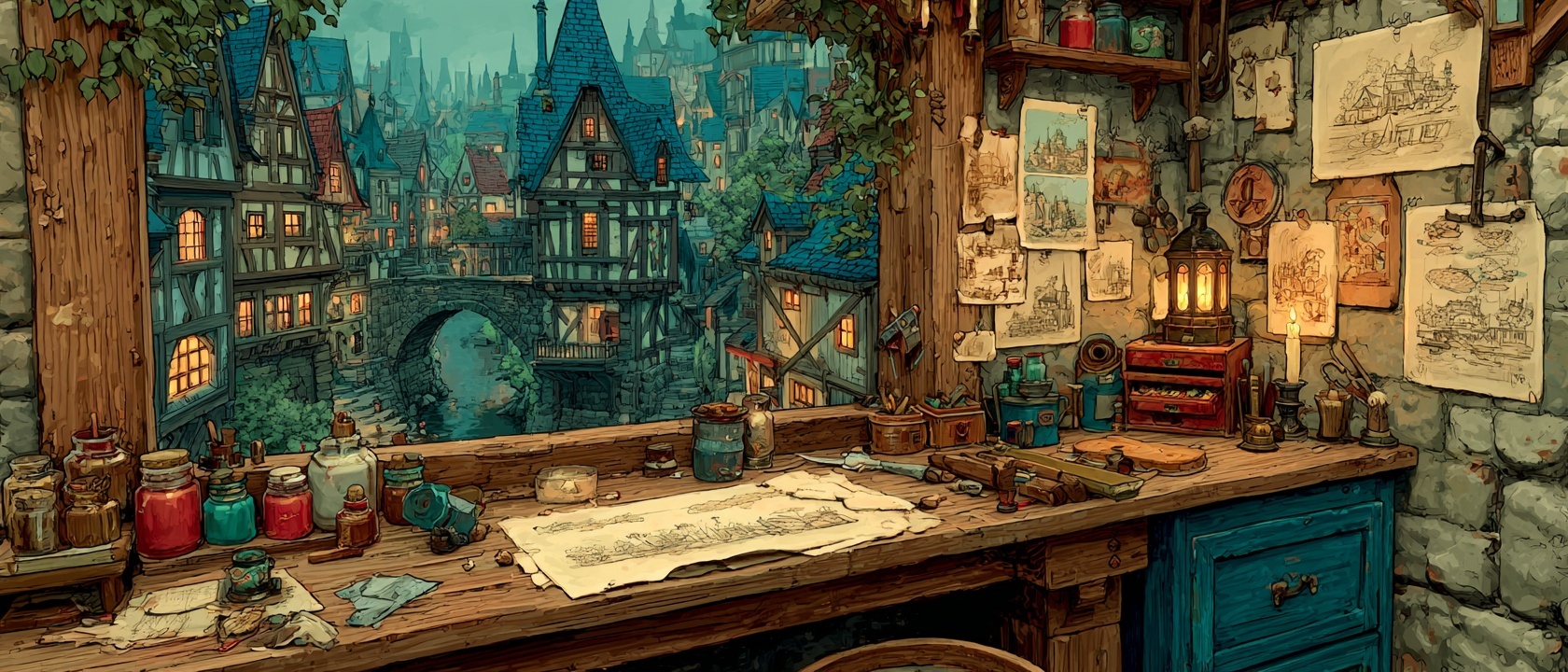
About Wanderfolk — The AI NPC Medieval RPG
The Game
Wanderfolk is an indie AI NPC game set in a procedural medieval world. Every NPC is a real conversation partner. Powered by AI, villagers remember what you tell them, form opinions about you, and spread gossip that shapes how the entire village treats you. One careless insult can cost you your reputation. One good deed can open doors you didn't know existed.
The world is procedurally generated — 14 biomes, each with distinct cultures, economies, and military ambitions. Villages trade, expand, and wage war. You can craft, fight, explore dungeons, recruit companions, or manipulate politics from the shadows. Every playthrough is different.
The Vision
Most RPGs give NPCs a handful of scripted lines. We wanted something different — a world where talking to people matters as much as fighting monsters. Where your reputation is earned through conversation, not just quests. Where the village elder remembers that time you promised to help with the harvest and never showed up.
Wanderfolk is an experiment in emergent storytelling. The AI doesn't follow a script — it responds to who you are, what you've done, and what the village thinks of you. The stories that emerge are yours alone.
What Makes Wanderfolk Different
Wanderfolk is now focused on a Steam-first launch for Windows and macOS. The world is procedurally generated using a Whittaker biome diagram that maps temperature and moisture to 14 distinct biomes, each with its own culture, architecture, and economy.
Every NPC is powered by AI with persistent vector-based memory. When you tell the blacksmith you'll deliver iron by tomorrow, he remembers. When you don't show up, his opinion of you drops — and he tells the shopkeeper. The gossip system propagates reputation changes across a social network, so one bad interaction can cascade. Your reputation with each NPC ranges from -100 (enemy) to +100 (beloved). Drop below -90 globally and the village banishes you — game over.
There are 37 NPC roles (blacksmiths, herbalists, warlords, scribes, and more), 6 distinct voice types, 168 crafting recipes across 7 stations with skill-based minigames, 27 monster types, 14 dungeon bosses, and a full village warfare system where settlements raise armies, build fortifications, and conquer neighboring territory. Every playthrough generates a different world with different politics.
Key Numbers
How It Compares
If you like the village life and relationship-building of Stardew Valley, the medieval open-world survival of Medieval Dynasty, or the emergent simulation depth of Dwarf Fortress, Wanderfolk sits at the intersection. Like Stardew Valley, you build relationships with villagers — but here those relationships are driven by AI conversation, not scripted dialogue trees. Like Medieval Dynasty, you survive in a medieval world with crafting and economics — but Wanderfolk uses pixel art and a Steam-first release strategy instead of a 3D open world. Like Dwarf Fortress, the world generates emergent stories through simulation — but Wanderfolk is accessible, visual, and designed to be played, not deciphered.