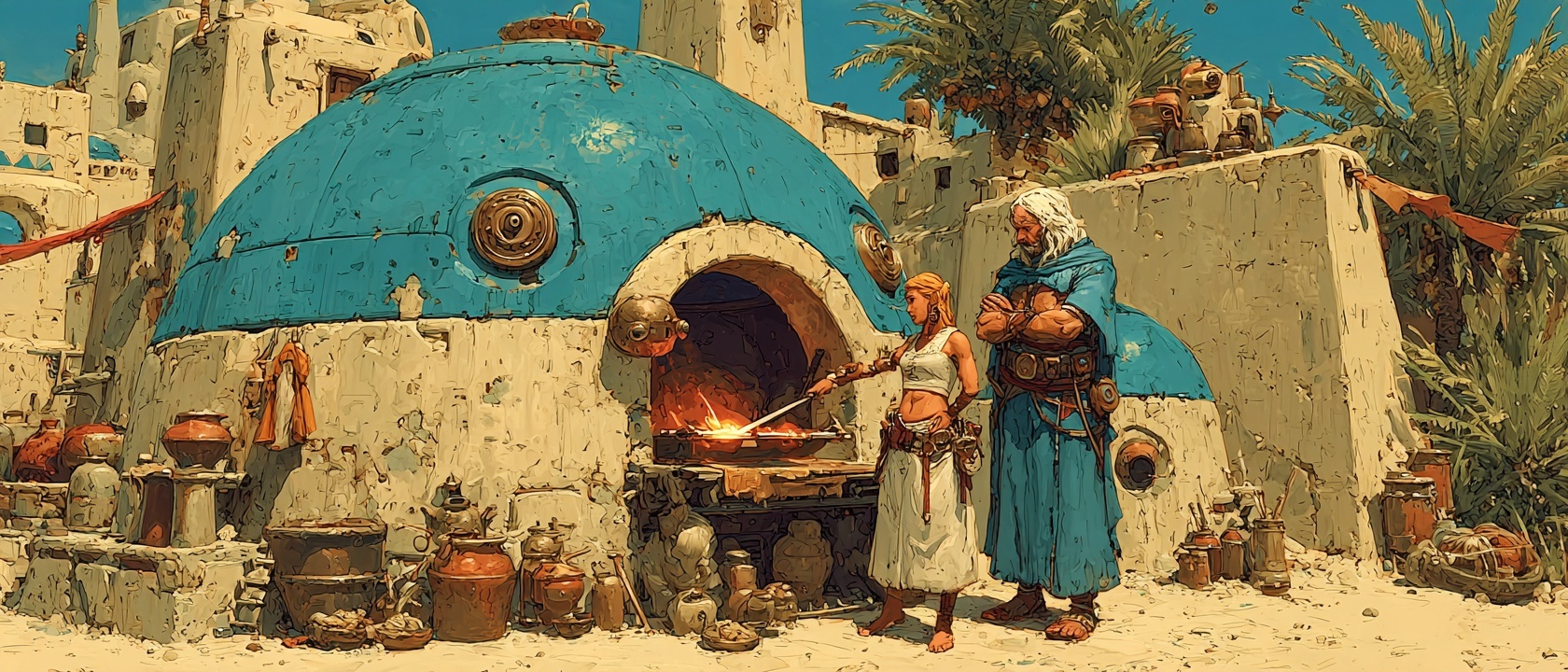
256+ Recipes
Wanderfolk's crafting system covers weapons, armor, tools, consumables, jewelry, poisons, and furniture — over 256 recipes in total. But you don't start with access to all of them. Recipes unlock through NPC relationships. And when you craft, you play for quality.
Befriend the village blacksmith and he'll teach you how to forge iron blades. Earn the herbalist's trust and she'll share her alchemy recipes. Impress the enchanter and you'll learn to imbue weapons with elemental damage. Every crafting tier is gated behind a real relationship, not a skill point.
This means your crafting progression is unique to your playthrough. A player who befriends the blacksmith first builds a different arsenal than one who starts with the herbalist. Your social choices shape your combat capabilities. The full recipe list is in the crafting recipes wiki.

Crafting Minigames
Crafting isn't a menu click — it's a hands-on minigame with a visually redesigned interface featuring cleaner UI, better feedback animations, and distinct visual identities for each type. Four thematic minigames match the kind of work you're doing:
- Precision Measure — a press-your-luck gauge fills toward a target zone. Stop at the right moment, or hold Shift to pause strategically. Used for alchemy and cooking.
- Temperature Control — manage a heat gauge with a drifting target zone. Hold to heat, release to cool. Momentum makes precision a challenge. Used at the forge and kitchen.
- Rhythm Timing — approach circles shrink toward zones on an item silhouette. Click at the right moment to land your strikes. Used for forging weapons and tools.
- Loom Pattern — trace a pattern across a node grid. Decoy nodes at higher difficulties try to throw you off. Used at the loom and workbench.
Your minigame score (0-100) maps to four quality tiers: Poor, Normal, Fine, and Excellent. A perfect forge run produces an excellent blade worth 2x its base value. A sloppy session gives you a poor-quality result at half value.
Quick Craft unlocks after you've mastered a recipe — skip the minigame entirely for a randomized result based on your track record. Perfect for batch-crafting materials you've already proven you can handle.

Crafting Stations
Recipes are tied to specific crafting stations, and each station unlocks a different category of items:
- Forge & Anvil — weapons, armor, metal tools. Found in blacksmith shops.
- Workbench — wooden items, furniture, basic tools. Common in most villages.
- Loom — cloth armor, bags, rope. Found in weaver workshops.
- Alchemy Table — potions, poisons, salves. Found with herbalists.
- Cooking Fire — food, meals, preserved rations. Found in taverns and homes.
- Enchanting Altar — enchantments, scrolls, magical imbues. Rare — found in temples.
You'll need to visit different villages to access all station types. A farming village might have a cooking fire and workbench but no forge. A mountain mining town has a forge but no loom. Planning your travel routes around crafting access becomes part of the strategy.

Jewelry & Gemcutting
39 jewelry recipes produce rings, necklaces, bracelets, and crowns at dedicated jeweler workbenches. Jeweler NPCs run their own shops with custom building interiors — find one in larger villages. Each piece of jewelry provides stat bonuses: damage, defense, speed, luck, or elemental resistance.
Gems come from mining and dungeon boss drops. Common gems are everywhere, but epic-tier gems only drop from dungeon bosses — rubies, sapphires, and diamonds that craft into the strongest accessories in the game. Wear two rings at once — equipping a second ring automatically fills your ring2 slot. The full jewelry system is documented in the jewelry wiki.
Alchemy & Poisons
22 alchemy recipes transform monster drops — once just vendor trash — into combat-changing consumables. Craft poisons that coat your weapons with burn (fire damage over time), freeze (slows enemies), or wither (reduces enemy defense). Throwable potions let you apply effects at range. Coating charges are visible in the HUD — see exactly how many coated strikes remain, and misses no longer waste charges.
Every alchemy recipe uses ingredients dropped by specific monsters, giving you a reason to hunt creatures you'd otherwise ignore. Effect strength scales with crafting quality — a masterwork poison burns twice as long as a crude one. Gold ingot forging adds a new crafting tier for high-end weapons and jewelry.

Resource Gathering
The raw materials for crafting come from the world itself. Mine copper, iron, and gold from ore deposits. Forage herbs, mushrooms, and berries from wild plants. Chop trees for wood and bark. Farm crops for food ingredients.
Every biome has unique resources. Volcanic regions produce obsidian and fire crystals. Tundra biomes yield ice crystals and frost-resistant timber. The crystal caves are the only source of prismatic shards. Desert biomes have rare cactus extracts and sandstone.
Higher-quality recipes demand rarer materials. A crude sword needs basic iron ore from any meadow deposit. A masterwork blade needs refined steel from mountain mines and a shadow core from night-hunting shadow wolves. The crafting system pulls you across the entire world map.

Farming
Find a farming village and you can work the fields. Plant seeds, water them, and watch crops grow through visible stages — seedling, sprout, mature, ready to harvest. Each crop type has its own growth rate and seasonal preference.
Weather matters. Rain automatically waters your crops and boosts growth speed. A dry spell means more manual watering. Storms can damage fragile plants. Seasonal yields vary too — spring and summer are prime growing seasons, while winter limits you to cold-hardy crops.
Farming feeds into both cooking and trade. Grow wheat for bread recipes, herbs for alchemy, or cash crops to sell at market. Biome crops add exotic ingredients from foraging — desert cactus fruit, coastal kelp, grove fae blossoms — that unlock powerful recipes. The culinary skill sub-branch makes cooked meals even stronger, rivaling mid-tier potions when fully invested. A player who invests in farming builds a steady income stream that funds gear upgrades and crafting materials from other sources.

Village Trade
Every village NPC with a shop role stocks inventory appropriate to their trade. Blacksmiths sell weapons and armor. Herbalists sell potions and ingredients. Merchants carry a wider variety but at higher prices. Innkeepers sell food and drink.
Your reputation with each NPC directly affects their prices. Reach "beloved" status (+80 reputation) and you get a 25% discount on everything they sell. Drop to "hostile" (-80) and they'll charge you a 50% markup — if they'll deal with you at all. At "enemy" status, they refuse service entirely.
The economy creates a feedback loop with the reputation system. Good relationships mean cheaper supplies, which means more gold for better gear, which means you can take on harder dungeons, which means rarer loot to sell, which funds your next crafting project. Or you can burn every bridge, pay through the nose, and survive on what you can make and steal. Your call.
