8 Games Like AI Dungeon — Alternatives With Better Memory and Gameplay
AI Dungeon pioneered AI storytelling. These games take it further with visuals, memory, and real consequences.
AI Dungeon proved that AI-generated storytelling works. But its summarization-based memory loses details over long sessions, and text-only format limits immersion. These eight alternatives solve different pieces of that puzzle — persistent memory that never forgets, visual worlds you can explore, and game mechanics that give your words real weight. If you loved what AI Dungeon started, these games show where it's going.
Why People Look for AI Dungeon Alternatives
AI Dungeon launched in 2019 and proved something important: give a language model a fantasy prompt and let the player type anything, and you get stories no designer could have scripted. Millions of people played it. Many still do. But after the novelty wears off, three structural problems push people to look elsewhere.
Memory loss. AI Dungeon compresses older story content into summaries as the context window fills up. The further you get into an adventure, the more the AI forgets. That NPC who swore a blood oath to you thirty turns ago? Gone. The name of the tavern you established as your base? Summarized into oblivion. This isn't a bug — it's an architectural constraint of fitting an infinitely long story into a finite context window. Some alternatives solve this with vector databases that retrieve memories by relevance rather than recency.
No visual world. AI Dungeon is text on a screen. You describe walking into a castle, and the AI describes what you see. That works for imagination-driven play, but it means there's no spatial world to explore, no pixel art village to wander through, no map to orient yourself in. Several alternatives pair AI conversation with actual game worlds — pixel art, 3D environments, or illustrated scenes — giving your imagination a visual anchor.
No real consequences. In AI Dungeon, you can insult a king and the AI might narrate some guards chasing you, but there's no persistent game state tracking that the king now hates you. No reputation number that locks you out of quests. No gossip system where the king's court spreads word of your insult to neighboring towns. The AI generates a plausible next paragraph, but it doesn't simulate a world with rules. Some alternatives integrate AI conversation into game systems where your words have mechanical weight — prices change, jobs become unavailable, NPCs coordinate against you.
The games below each address at least one of these gaps. No single alternative beats AI Dungeon at everything — its genre flexibility and creative freedom remain unmatched. But if you want deeper memory, visual immersion, or consequential dialogue, one of these will scratch the itch better.
1. Wanderfolk
 Visual AI RPG + Persistent Memory
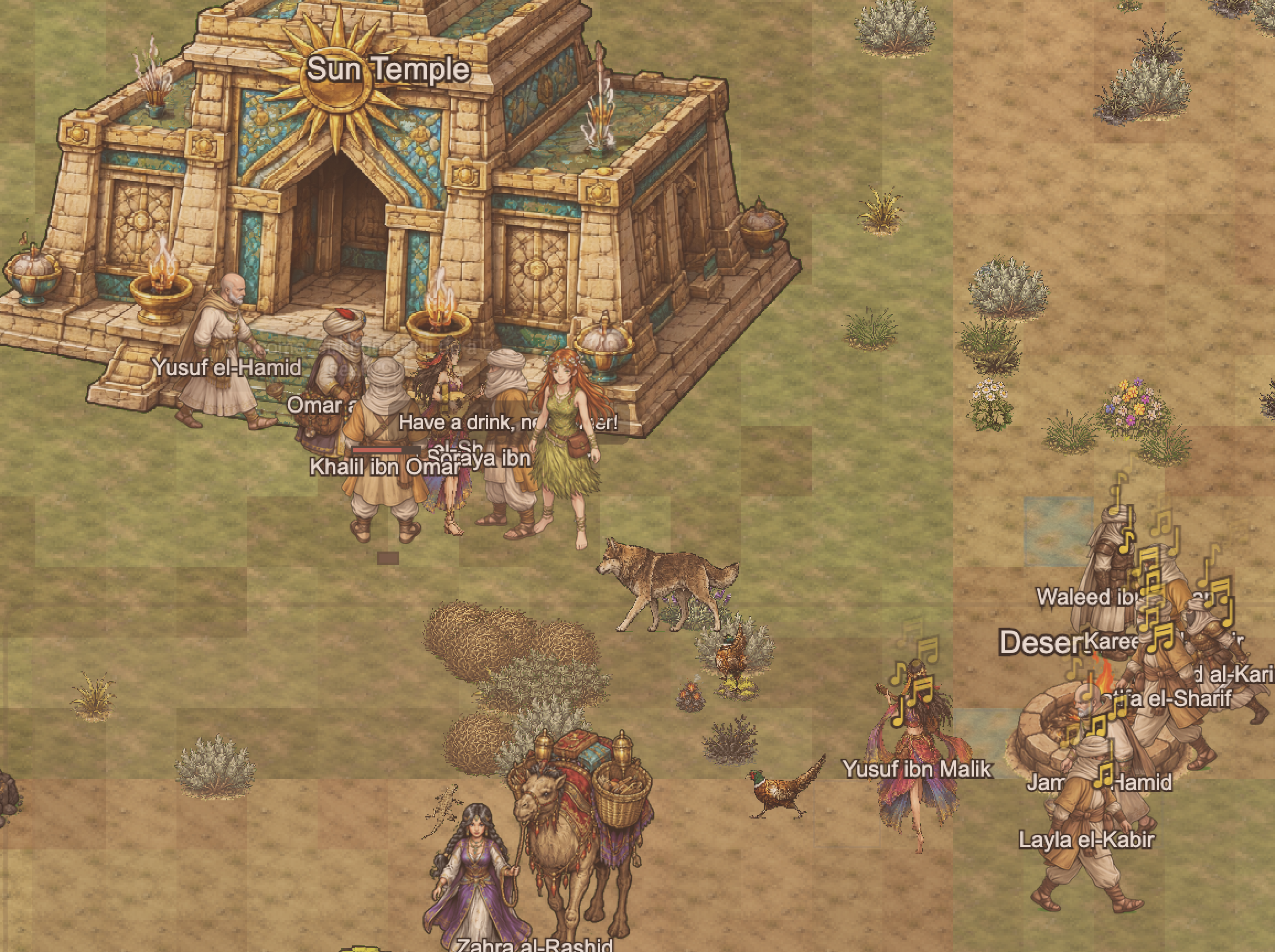
 AI Dungeon is text on a screen. Wanderfolk gives you a visual world to inhabit — a pixel-art RPG on Steam with exploration, crafting, combat, and a procedurally generated medieval village where every NPC is powered by AI with free-form conversation. Where AI Dungeon asks you to imagine the tavern, Wanderfolk lets you walk through it, sit at the bar, and talk to the barkeep about anything. The shift from text-only to visual world changes what AI conversation feels like: you're a character in a place, not an author drafting a story.
The memory system attacks AI Dungeon's core weakness head-on. AI Dungeon summarizes and compresses old context as the story grows, which means details vanish — promises, names, grudges, all smoothed into generic summaries. Wanderfolk uses persistent memory that retrieves past conversations by what they were about, not when they happened. Promise an NPC you'll help defend the village, then don't show up. In AI Dungeon, that promise vanishes into the context window. In Wanderfolk, the NPC remembers, your reputation drops, and the gossip network ensures the whole village knows you broke your word.
That gossip network is the third thing AI Dungeon lacks entirely: real consequences. Every NPC tracks their opinion of you, and that opinion drives concrete game mechanics — shop prices shift, jobs become unavailable, NPCs refuse to share information. Word spreads between characters through social connections, so mistreating one person ripples through the community. Push the whole village against you and they banish you — game over. Every conversation in Wanderfolk carries risk that AI Dungeon's consequence-free storytelling never delivers. Your words don't just generate the next paragraph; they reshape the game world.
Platform: Steam (Windows, macOS). Steam store page
2. Hidden Door
 AI Tabletop RPG
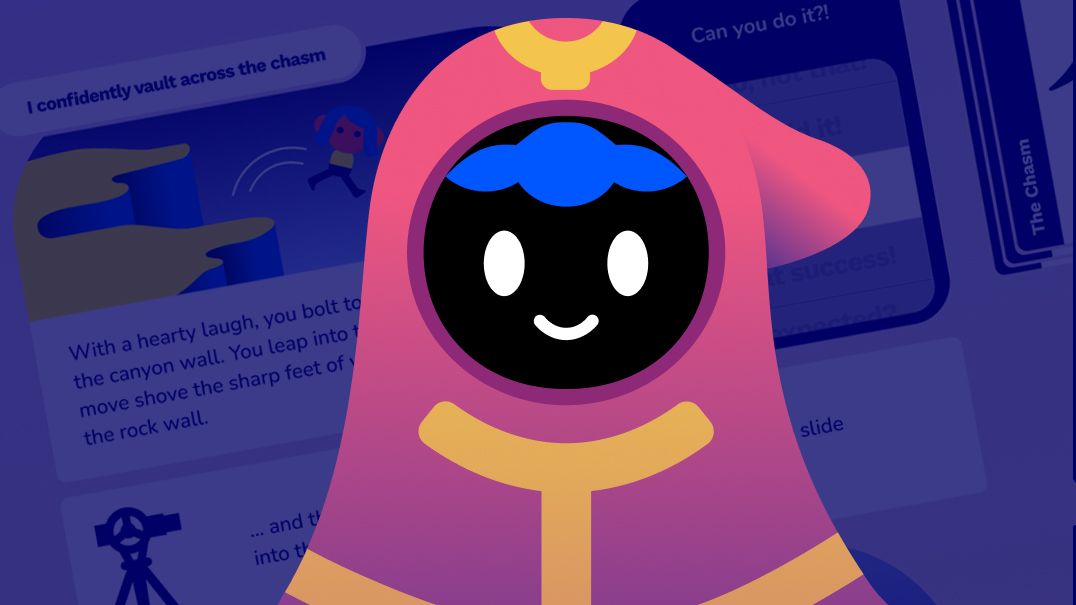
 Think of Hidden Door as AI Dungeon with a real game master. Where AI Dungeon drops you into a blank prompt and lets the LLM improvise everything — setting, tone, rules, consequences — Hidden Door gives the AI a structured literary world to run. You choose a setting like Wizard of Oz, Alice in Wonderland, or a community-created world, and the AI narrates your adventure within that world's logic, presenting scenes as interactive graphic novel panels. Declare you want to bargain with the Wicked Witch rather than fight her, and the AI improvises the negotiation while keeping it consistent with Oz's internal rules. The result is stories that feel authored rather than hallucinated.
The multiplayer dimension is what AI Dungeon has never cracked. Hidden Door supports party-based play where multiple humans improvise together inside the AI's narrative. One player tries to befriend the enchanted forest guardian while another picks a fight with it, and the AI has to reconcile both choices into a coherent scene. The social dynamics between players — negotiation, betrayal, unexpected alliances — generate story surprises that no single-player AI conversation can replicate, because the unpredictability comes from other humans, not just the model.
Memory is session-based, not persistent across adventures. But if your frustration with AI Dungeon is narrative drift — the way settings shift, tone wanders, and established facts contradict themselves as the context window fills up — Hidden Door's structured approach solves that problem by constraining the AI to a world with rules. It's the best option for people who want a tabletop RPG experience with an AI game master rather than a human one.
Platform: Browser, freemium.
3. Suck Up!
 AI Social Deception
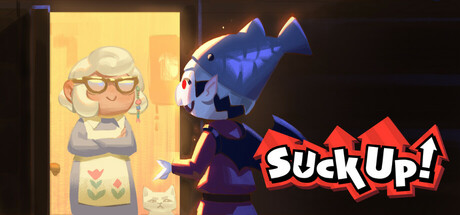
 AI Dungeon's greatest strength — you can do literally anything — is also its weakness. With no goal, no fail state, and no constraints, conversations drift. Suck Up! takes the opposite approach and proves that focused AI conversation is more fun than open-ended AI conversation. You play a vampire going door-to-door in a 3D neighborhood, and every NPC has one job: keep you out. Your one job: talk your way inside. That single constraint — persuade or fail — turns every doorstep exchange into a tense, hilarious improvisation challenge that AI Dungeon's neutral narration never delivers.
Each resident runs on AI that tracks your credibility in real time. Claim you're a pizza delivery guy, and the NPC might ask where your uniform is. Pivot to "I'm actually a health inspector" and they'll note the contradiction. Try the same lie on the retired military officer that worked on the yoga instructor and watch it backfire completely. The AI catches inconsistencies, adjusts suspicion, and slams the door when you push too far. Where AI Dungeon generates the next plausible paragraph regardless of what you said five paragraphs ago, Suck Up!'s NPCs hold you accountable for every claim you've made in the conversation.
Voice input seals the deal. Speaking to NPCs instead of typing changes the social dynamics completely — you hear the hesitation in your own voice when you're bluffing, and the AI's voiced responses create a back-and-forth rhythm that text can't match. Session-based memory means NPCs reset between play sessions, but within a run, the escalating suspicion and your accumulating lies create natural story arcs. Multiple modes including Love Bites (breaking up couples at a party) and rap battles extend the concept well beyond the core campaign.
Platform: PC (Steam, ~$15).
4. Dead Meat
 AI Horror Chat
 Dead Meat takes the slasher-horror genre and turns AI conversation into a survival mechanic. You're in a horror scenario chatting with AI characters — suspects, allies, and potential victims — using voice or keyboard, trying to gather information, build trust, and figure out who's dangerous before it's too late. Each character has a distinct personality that reacts emotionally in real time to your questioning tactics. Push too hard and they clam up. Be too trusting and you miss the warning signs.
The fundamental difference from AI Dungeon is pressure. AI Dungeon gives you infinite time to craft your responses — there's no clock, no stakes, no urgency. Dead Meat puts you under time pressure where the quality and speed of your conversational choices directly determine who lives and who dies. The AI conversation isn't a creative writing exercise; it's an interrogation tool where misreading someone's tone or asking the wrong question has irreversible consequences. That tension makes every exchange feel weightier than anything in AI Dungeon's relaxed, exploratory format.
Best for people who want AI conversation as a core survival mechanic rather than open-ended creative collaboration. The horror framing gives conversations emotional stakes that AI Dungeon's genre-agnostic approach typically lacks.
Platform: PC (Steam, ~$10).
5. Skyrim + Mantella Mod
 AI Mod for Open World RPG
 AI Dungeon gives you conversational freedom in a text void. Skyrim with the Mantella mod gives you the same conversational freedom inside a real 3D world with 2,500+ named NPCs, hundreds of locations, faction wars, and dragon attacks. Walk up to Lydia and say anything — ask about her childhood, debate the civil war, negotiate pay for the next dungeon crawl. She responds with synthesized voice, drawing on her actual lore backstory, her current location, the time of day, and what you've discussed before. It's the AI Dungeon fantasy made literal: talk to anyone about anything, but in a world you can see, fight in, and explore.
NPCs remember you between sessions through persistent summarized conversation logs. Bring up a deal you struck with a merchant last week, and they can reference it — something AI Dungeon's within-session summarization loses as stories grow longer. The memory isn't as granular as purpose-built retrieval systems (it's full summaries rather than relevance-based recall), but for long-running playthroughs it means characters accumulate genuine history with you. Combined with Skyrim's existing relationship systems — factions, follower loyalty, crime bounties — conversations feel grounded in a world with state.
The tradeoff is setup complexity. Mantella chains together several tools behind the scenes — an LLM, speech-to-text, voice synthesis — and getting them configured takes patience. Pantella, an actively maintained fork, has smoothed some of the rough edges. Once running, the experience is unmatched: a AAA open world with AI Dungeon's conversational freedom layered on top. Nothing else on this list has Skyrim's world scope, and nothing in AI Dungeon's text-only format can replicate the feeling of having a voiced AI conversation with a character standing in front of you in a blizzard on a mountain pass.
Platform: PC only (requires mod setup). The mod itself is free; you need Skyrim and optionally an LLM API subscription.
6. EmemeTown
 AI Social Sim
 AI Dungeon is about adventure — quests, combat, exploration. EmemeTown is AI Dungeon for social drama instead. You interact with AI townspeople in a cartoon-style world, but instead of slaying dragons, you're navigating relationships, stirring up gossip, playing matchmaker, and watching the fallout when two NPCs who hate each other get assigned as neighbors. The AI powers social dynamics rather than narrative arcs, and the stories that emerge are closer to reality TV than fantasy epic.
The key difference from AI Dungeon is that NPCs have lives independent of you. In AI Dungeon, characters exist only when the AI generates them in response to your prompt — they have no schedule, no off-screen relationships, no autonomous behavior. EmemeTown's NPCs wake up, go to work, visit friends, form opinions about each other, and gossip about events you weren't present for. You can influence them by role-playing as their "inner voice," nudging a shy character to confess feelings or pushing a grudge toward confrontation. The drama that unfolds feels organic because it's driven by multiple interacting AI personalities, not a single narrative engine responding to your prompts.
The experience is more sandbox than polished product — Early Access edges show in the UI and pacing. But AI-driven facial expressions and over 1,000 body animation types give characters visual personality that text-only AI Dungeon can never convey. Best for people who loved AI Dungeon's character interactions but wanted persistent recurring relationships and social consequences rather than one-shot adventures that vanish when you close the tab.
Platform: PC (Steam Early Access, ~$15).
7. inZOI
 AI Life Sim
 The Sims meets AI conversation. KRAFTON's inZOI sold over a million copies in its first week and features "Smart Zois" — NPCs powered by Nvidia ACE technology that independently decide how to act based on their personalities, experiences, and emotional states. Characters form relationships, adjust daily schedules, and react to the world with contextual awareness that goes beyond scripted behavior trees. If AI Dungeon's appeal was creating stories about characters' lives and watching them unfold, inZOI gives you that in a visually stunning simulated world.
The AI conversations are more constrained than AI Dungeon — they're grounded in daily life activities (cooking, socializing, working, relaxing) rather than fantasy adventures with dragons and magic. But that grounding makes them feel more real. When a Smart Zoi decides to stop talking to you because you ignored them for three days, it hits differently than an AI Dungeon narrator telling you an NPC is angry. The emotional AI isn't generating text to sound angry; it's actually running anger as a simulation state that changes the NPC's autonomous behavior.
The tradeoff compared to AI Dungeon is creative freedom. You can't type "I cast a fireball at the town" and have the AI roll with it. inZOI confines AI to the logic of a life simulation. But within those constraints, the AI behavior is deeper and more persistent than anything AI Dungeon achieves. NPCs have genuine relationship memory that accumulates over time rather than getting summarized away.
Platform: PC (Steam Early Access, ~$30+). PS5 version expected in 2026.
8. Dwarf Fortress
 Emergent Narrative Simulation
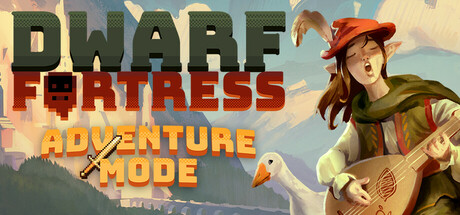
 Dwarf Fortress isn't an AI chat game, and including it on a list of AI Dungeon alternatives requires an explanation. The connection is this: many people who play AI Dungeon are ultimately chasing emergent stories — narratives that no designer scripted, moments of genuine surprise. AI Dungeon generates these through language models. Dwarf Fortress generates them through the deepest simulation ever built, with no LLM involved at all.
Every dwarf in Dwarf Fortress has memories, trauma, relationships, aesthetic preferences, grudges, and complex emotional needs. A dwarf might develop a drinking problem because their best friend died in a mining accident, which they witnessed, which gave them a permanent psychological condition that makes them prone to tantrums during meals, which destabilizes the dining hall, which cascades into a fortress-wide emotional crisis. No prompt generated that story. No language model hallucinated it. It emerged from hundreds of interlocking simulation systems tracking thousands of variables per character.
The memory system dwarfs (no pun intended) anything on this list including dedicated AI memory solutions. Dwarfs remember specific events for years — not summaries, not embeddings, but the actual events with participants, locations, and emotional impact. They form opinions about other dwarfs based on accumulated interactions. They develop preferences from experience. The simulation doesn't forget because it was never trying to fit infinite history into a finite context window; it stores everything in structured data.
The tradeoff is obvious: you can't have a freeform conversation with a dwarf. There's no language model, no chat interface, no "say anything" input. The emergent storytelling comes from reading the simulation's output, not from directing it with words. But if what you really loved about AI Dungeon was the surprise — the feeling that a story went somewhere you never expected — Dwarf Fortress delivers that through a completely different mechanism, and arguably more reliably.
Platform: PC (Steam, ~$30, or free classic version).
Comparison Table
| Game | AI Type | Memory | Visual World | Free | Multiplayer |
|---|---|---|---|---|---|
| Wanderfolk | LLM (Grok) | Persistent vector | Yes (pixel RPG) | Yes | No |
| Hidden Door | LLM | Session | Illustrated scenes | Freemium | Yes |
| Suck Up! | LLM | Session | Yes (3D) | No ($15) | No |
| Dead Meat | LLM | Session | Yes (3D) | No ($10) | No |
| Skyrim + Mantella | LLM (configurable) | Summarized (persistent) | Yes (3D open world) | Free (mod) | No |
| EmemeTown | LLM | Relationship state | Yes (cartoon) | No ($15) | No |
| inZOI | LLM | Relationship state | Yes (3D realistic) | No ($30+) | TBD |
| Dwarf Fortress | None (simulation) | Simulation memory | Yes (tiles/ASCII) | Classic free | No |
| AI Dungeon (reference) | LLM | Summarization | No (text only) | Freemium | Limited |
How to Choose the Right AI Dungeon Alternative
The best alternative depends on which part of AI Dungeon you valued most:
- If you want persistent NPC memory — Wanderfolk (vector retrieval) or Skyrim + Mantella (summarized logs). These are the only two options where NPCs remember you across sessions with any reliability.
- If you want a visual world — Almost everything on this list except AI Dungeon itself. Wanderfolk for pixel art RPG, Suck Up! and inZOI for 3D, Skyrim for open-world AAA.
- If you want multiplayer AI storytelling — Hidden Door is the clear winner. It's the only option with genuine multiplayer AI narrative.
- If you want voice conversation — Suck Up! (built-in voice) or Skyrim + Mantella (modded voice pipeline). Speaking to AI characters instead of typing fundamentally changes the dynamic.
- If you want consequences for your words — Wanderfolk's reputation and banishment system. No other game on this list integrates AI conversation into game mechanics as deeply.
- If you want AI Dungeon but better — Hidden Door is the closest structural match (AI narrates, you type freely) but adds illustrated scenes, world structure, and multiplayer.
- If you want emergent stories without LLMs — Dwarf Fortress generates stories through simulation depth rather than language generation, and does it more reliably.
Frequently Asked Questions
Is there a free alternative to AI Dungeon?
Hidden Door offers a free entry point for structured AI storytelling, and the Mantella mod for Skyrim is effectively free if you already own the base game. Wanderfolk takes a different route: it is a paid Steam RPG that directly addresses AI Dungeon's biggest weaknesses with a visual world, persistent memory that doesn't degrade over long sessions, and a reputation system that gives conversations real consequences.
Why do people leave AI Dungeon?
The three most common reasons are memory loss (the AI forgets details as stories get longer), lack of visual world (text-only format), and no real consequences (nothing you say changes persistent game state). The alternatives on this list address one or more of these limitations.
What AI does AI Dungeon use?
AI Dungeon uses custom-tuned language models. It originally launched on GPT-2, later moved to GPT-3, and now offers multiple model tiers. Alternatives use different backends: Wanderfolk uses xAI Grok, Suck Up! uses undisclosed models, and Skyrim's Mantella mod supports multiple LLMs including local models.
Can I play AI Dungeon-style games in a visual world?
Yes. Wanderfolk offers AI conversation in a pixel-art RPG world, Suck Up! uses 3D neighborhoods, and Skyrim with the Mantella mod gives you AI conversation in a full open-world RPG. Hidden Door uses illustrated scenes. All of these add a visual dimension that AI Dungeon's text-only format lacks.
Which AI Dungeon alternative has the best memory?
Wanderfolk has the strongest persistent memory system. It retrieves past conversations by what they were about, not when they happened — so an NPC remembers a promise you made weeks ago if it's relevant to the current conversation, even if dozens of other chats happened in between. Skyrim's Mantella mod also has persistent summarized memory across sessions. Most other alternatives on this list are session-based, meaning NPCs forget everything when you close the game.
Try the AI Dungeon Alternative With Memory That Actually Works
Wanderfolk is moving to Steam. Every NPC remembers every conversation through vector-embedded memory that retrieves by relevance, not recency. A reputation system makes your words matter: prices change, jobs unlock, gossip spreads, and if you push too far, the village banishes you. It solves the three problems that make people leave AI Dungeon.
Explore More
- Best AI Chat Games — the wider landscape of AI-powered game conversations
- 10 Best AI NPC Games in 2026 — the definitive ranked list
- Games Where NPCs Remember You — a comparison of NPC memory systems across games
- Wanderfolk vs AI Dungeon — detailed head-to-head comparison
- How AI NPCs Work — the technical architecture behind AI-powered game characters