Wanderfolk vs Dwarf Fortress: Simulation Depth vs AI Conversation
Two games that believe the world should generate its own stories. They approach it from opposite directions.
Dwarf Fortress is a masterpiece of simulation — a game that generates thousands of years of procedural history, tracks the emotional state of individual dwarves, and produces emergent stories through cascading systems. Wanderfolk generates stories through AI conversation: NPCs remember what you say, form opinions, spread gossip, and can banish you. Both create narratives no designer scripted. The mechanism is entirely different.
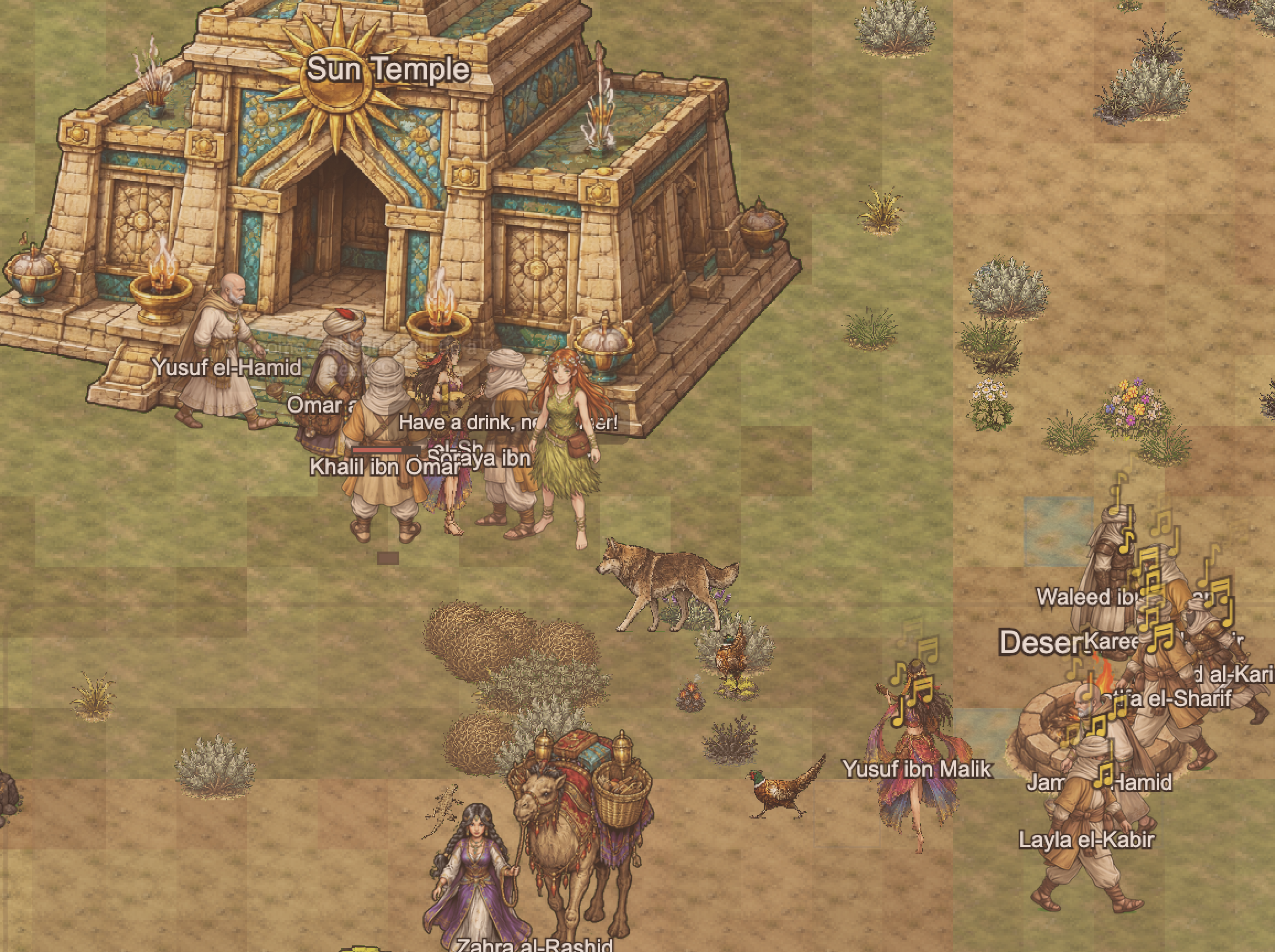 Wanderfolk
 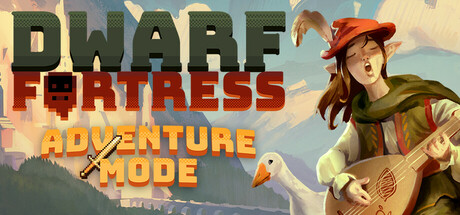 Dwarf Fortress
 At a Glance
| Wanderfolk | Dwarf Fortress | |
|---|---|---|
| Price | $6.99 launch price | Free (Classic) / $29.99 (Steam Premium) |
| Platform | Steam (Windows, macOS) | Windows, Mac, Linux (download) |
| Perspective | 2D top-down pixel art | 2D top-down (tile graphics or ASCII) |
| Player Role | Single character — social survival | Colony manager (Fortress) or adventurer (Adventure) |
| NPC System | AI conversation with vector memory and reputation | Simulated personalities, relationships, and trauma |
| World Generation | 14 biomes, 10 cultures, village economies | Thousands of years of civilisation history |
| Learning Curve | Minutes to start playing | Hours to days (legendary difficulty) |
| Session Length | 30 min to a few hours | Hours to hundreds of hours |
| Download Required | Yes | Yes |
Emergent Storytelling
Dwarf Fortress
- Stories emerge from simulation cascading — a forgotten beast breaks into a tavern, a dwarf goes berserk from grief, a flood destroys the food stockpile
- Thousands of years of pre-game history create a backdrop of wars, fallen civilisations, and legendary artifacts
- The player observes and shapes events indirectly through fortress design and management decisions
- Community sharing of "stories that happened" is a core part of the DF culture
Wanderfolk
- Stories emerge from AI conversation — you convince, lie to, befriend, or anger NPCs who remember everything
- Gossip networks mean one conversation can reshape your standing across an entire village
- Village warfare, alliances, and territory conquest create political stories you participate in directly
- Every playthrough produces unique narratives because AI responses are never scripted
The difference: In Dwarf Fortress, you watch stories happen to your dwarves. In Wanderfolk, stories happen to you through conversations with characters who remember and judge you. Both produce moments no designer planned — the mechanism is what differs.
NPC Depth
Dwarf Fortress
- Each dwarf has personality facets, beliefs, goals, and emotional states
- Dwarves form friendships, marriages, grudges, and experience trauma from witnessing death
- Personality affects behaviour: a dwarf prone to anger may start fights; a depressed dwarf may refuse to work
- Scale is massive — a fortress can have 200+ individually simulated dwarves
- Interaction is observed through status screens and announcements, not conversation
Wanderfolk
- Each NPC has a procedural identity: one of 37 roles, personality traits, backstory, and voice type
- NPCs engage in freeform AI conversation — you can say anything and get a contextual response
- Past conversations are stored as vector embeddings and retrieved via cosine similarity when relevant
- Reputation tracked per-NPC from -100 to +100 with concrete gameplay effects
- Gossip system propagates your reputation through NPC social graphs
DF is wider; Wanderfolk is deeper per NPC. Dwarf Fortress simulates hundreds of entities with internal states you observe. Wanderfolk simulates fewer NPCs but each one can hold a real conversation, remember your promises, and spread word of your behaviour. Width vs depth.
World Generation
Dwarf Fortress
- Generates thousands of years of history before you start playing
- Civilisations rise, wage war, create artifacts, and fall — all procedural
- Geological layers, aquifers, magma pipes, and mineral veins are simulated
- Named historical figures with tracked lineages and life events
- The generated world is arguably the deepest in any game ever made
Wanderfolk
- 14 distinct biomes from tundra to volcanic wasteland
- 10 procedural cultures with unique naming, architecture, and social norms
- Villages with independent economies, trade routes, and military forces
- Political alliances and territorial warfare between settlements
- Every world is immediately explorable — the history is the history you create
DF generates a deeper past; Wanderfolk generates a more immediate present. Dwarf Fortress world generation is unmatched in scope and historical depth. Wanderfolk's world is smaller but immediately tangible — you walk through its biomes, talk to its NPCs, and participate in its politics from minute one.
Accessibility
Dwarf Fortress
- One of the steepest learning curves in gaming history
- The Steam Premium edition (with tile graphics and tutorials) improved onboarding significantly
- Most players still rely heavily on the community wiki
- Requires download and a capable PC
- Rewarding investment — but it is an investment
Wanderfolk
- Launching on Steam for Windows and macOS
- WASD to move, E to talk, and the game teaches you the rest
- Designed for sessions of 30 minutes to a few hours
- Core loop is social: talk to NPCs, build reputation, survive
- Depth reveals itself over time without demanding it upfront
This is the biggest practical difference. If you have the time and patience for Dwarf Fortress, its depth rewards you like nothing else. If you want to start playing in the next 30 seconds with zero setup, Wanderfolk is moving to Steam right now.
Player Agency
Dwarf Fortress
- In Fortress mode, you manage a colony — designating tasks, building infrastructure, handling crises
- In Adventure mode, you play a single character exploring the generated world
- Agency is primarily architectural and strategic — you shape the conditions, not the individual moments
- The "Fun" of DF often comes from losing control of cascading disasters
Wanderfolk
- You are one person — a homeless farmer who must earn their place in the world
- Agency is social and conversational — your words carry weight
- Reputation determines access: jobs, prices, information, and whether you can stay
- If your global reputation drops below -90, you are banished — game over
Different scales of agency. DF gives you control over a colony's fate. Wanderfolk gives you control over one person's reputation in a world that judges every word you say. Colony architect vs social survivor.
The Verdict
Dwarf Fortress is the deepest simulation game ever made. That is not hyperbole — after more than 20 years of development, its systems interact at a level no other game approaches. If you want to lose yourself in a world where geology, psychology, history, and fluid dynamics all collide, nothing else comes close. The Steam Premium edition with its tile graphics and tutorials has made it more approachable than ever, though it still demands serious investment.
Wanderfolk takes a different path to the same destination. Instead of generating stories through simulation cascading, it generates them through AI conversation. You don't observe emergent narratives from above — you live them at ground level, one conversation at a time, with NPCs who remember you and talk about you when you leave. The Steam launch focuses that experience into a faster, more accessible package than most heavy simulation games.
These games are complementary, not competitors. If you love Dwarf Fortress and want something more personal and conversation-driven, try Wanderfolk. If you love Wanderfolk's AI conversations and want to see how far simulation can go, Dwarf Fortress is waiting.
Frequently Asked Questions
Is Wanderfolk as deep as Dwarf Fortress?
Not in the same way. Dwarf Fortress simulates thousands of dwarves, geological layers, fluid dynamics, and millennia of procedural history — its simulation breadth is unmatched. Wanderfolk is deeper per individual NPC: each villager has AI-generated conversation, persistent vector memory, reputation tracking, and gossip propagation. DF is wider; Wanderfolk is deeper per interaction.
Can you play Dwarf Fortress in a browser?
No. Dwarf Fortress requires a download — either the free Classic version from bay12games.com or the paid Steam Premium edition. Wanderfolk is now focused on a Steam launch for Windows and macOS.
Which game has better NPC simulation?
It depends on what you mean by "better." Dwarf Fortress simulates hundreds of dwarves simultaneously with personality traits, relationships, trauma, and life goals — but you observe this through status screens, not conversation. Wanderfolk simulates fewer NPCs but each one can hold freeform AI conversations, remember what you said weeks ago via vector embeddings, and spread gossip about you through social networks. DF wins on scale; Wanderfolk wins on conversational depth.
Is Wanderfolk easier than Dwarf Fortress?
Significantly. Dwarf Fortress has one of the steepest learning curves in gaming history — most players spend hours with the wiki open before they can sustain a fortress. Wanderfolk is designed to be playable within minutes: WASD to move, E to talk, and the rest unfolds through conversation and exploration. Both games reward investment, but Wanderfolk does not require it upfront.
Do both games have procedural world generation?
Yes, and both take it seriously. Dwarf Fortress generates thousands of years of history with civilizations rising and falling, geological formations, and named historical figures. Wanderfolk generates worlds with 14 biomes, 10 cultures, independent village economies, political alliances, and territorial warfare. DF's history generation is deeper in time; Wanderfolk's is more immediately visible through conversation and exploration.
See Wanderfolk on Steam
Wanderfolk launches on Steam for Windows and macOS. Every NPC conversation is generated by AI in real time, reputations persist, and no two playthroughs unfold the same way.