AI NPCs in Games: What Works, What Doesn't, and What to Play in 2026
The technology is real. The hype is louder. Here's an honest look at where AI characters in games actually stand.
AI NPCs are the most talked-about innovation in games right now. Every major publisher has an initiative. NVIDIA is pitching autonomous characters. Startups have raised hundreds of millions. But strip away the press releases and conference demos, and the picture is more complicated. Some of this technology genuinely works. Some of it is vaporware. And some of it is solving problems players didn't ask to have solved. This is a practical look at where AI characters in video games actually stand in 2026 — written by developers who built one of these systems.
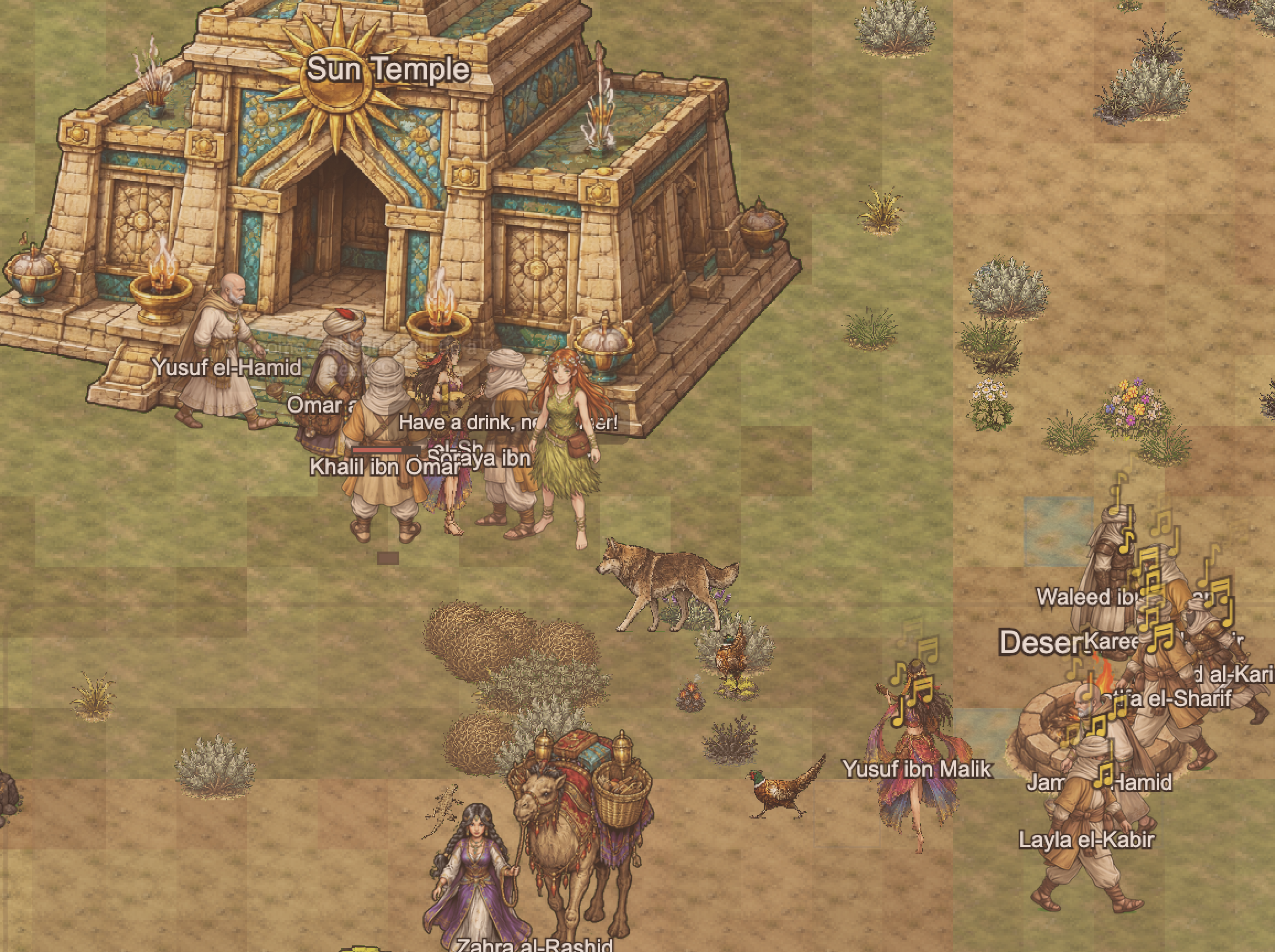
The Promise of AI NPCs
Anyone who has played an RPG knows the feeling: you've saved the world, defeated the ancient evil, returned to the village as a hero — and the blacksmith still greets you with the same line he said on day one. Scripted dialogue creates a ceiling. No matter how good the writing, NPCs can only respond to situations the writers anticipated.
AI NPCs promise to break that ceiling. The pitch is simple: characters that respond to what you actually say, remember what you've done, and change their behavior based on your relationship. Instead of choosing from three dialogue options, you type (or speak) whatever you want. The NPC responds in character, drawing on their personality, your shared history, and the current state of the world.
When this works, it creates something genuinely new. Conversations feel like interactions rather than menu navigation. NPCs become characters you can reason about, manipulate, befriend, or betray in ways the designer never scripted. In Wanderfolk, we've watched players spend twenty minutes talking to a single blacksmith — lying about where they found a gem, negotiating prices, asking about his family — because the conversation felt real enough to invest in.
Four Approaches to AI NPCs
Not all AI NPC implementations are created equal. The industry has settled into four distinct approaches, each with different tradeoffs.
1. Middleware Platforms
Companies like NVIDIA ACE, Inworld AI, and Convai offer tools that plug AI characters into existing game engines. NVIDIA ACE has made the most visible progress — its technology shipped in KRAFTON's inZOI (March 2025) and is being tested in PUBG: Battlegrounds as "PUBG Ally" AI teammates. Inworld AI has pivoted from a pure character engine to a broader real-time AI infrastructure platform, with sub-200ms text-to-speech and integrations used in games like Status and Death by AI. Convai offers similar NPC engine capabilities with Unity and Unreal plugins.
The middleware approach is powerful for adding AI conversation to games that weren't built around it, but the integration tends to be shallow. The AI handles dialogue; the game's existing systems handle everything else. Memory, reputation, and mechanical consequences often remain separate from the AI layer.
2. AI-as-Foundation Games
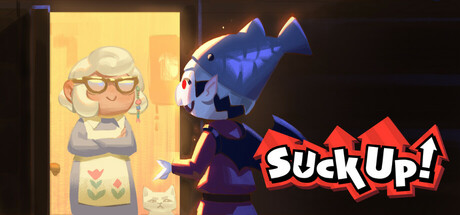
These are games where AI interaction isn't a feature bolted on — it's the core mechanic the game was designed around. Suck Up! (released October 2025) is the clearest success here: you play a vampire trying to talk AI-powered residents into inviting you inside. The entire gameplay loop is social deception via AI conversation.
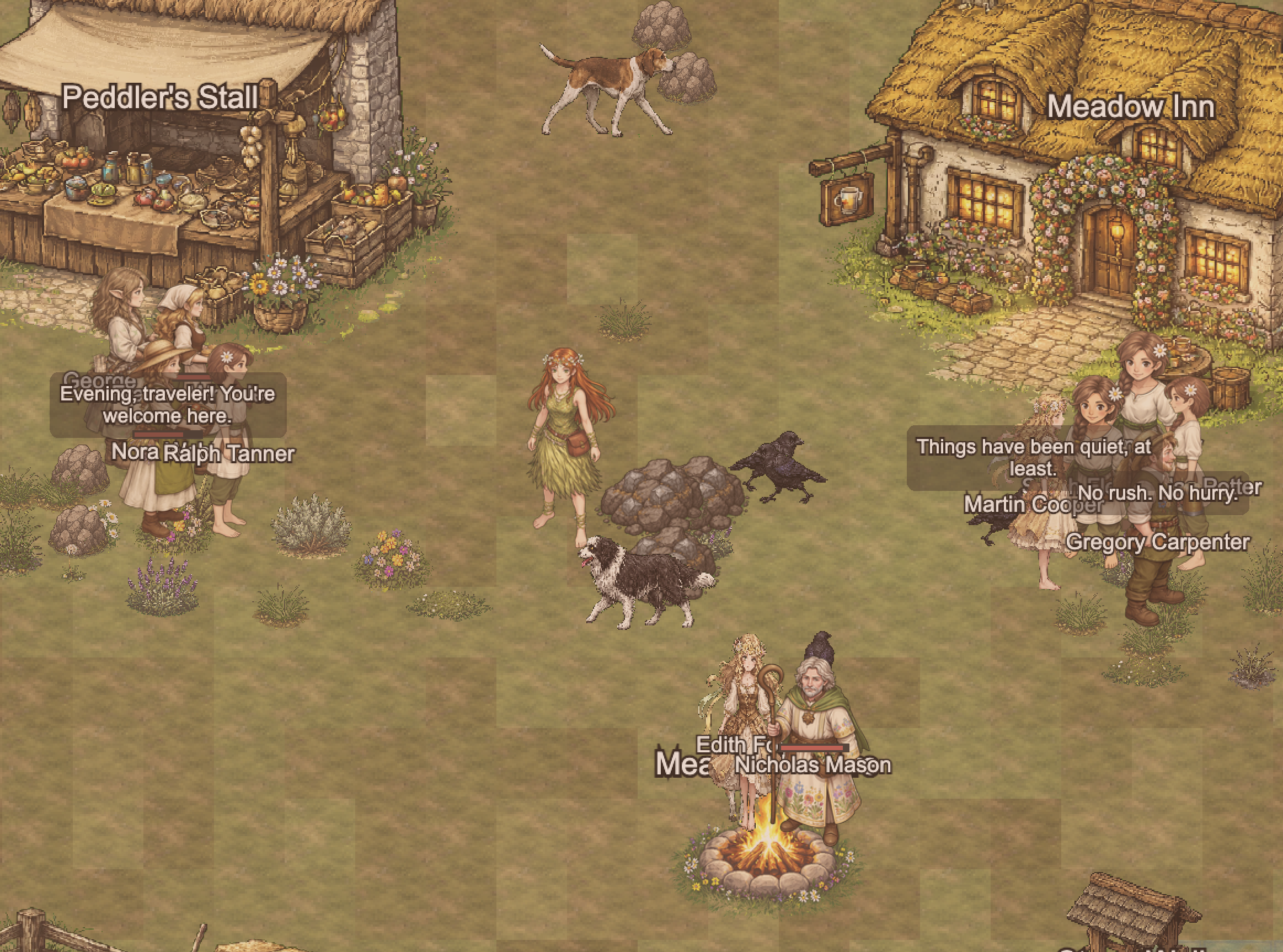
Wanderfolk takes a different angle: a medieval RPG where every NPC uses AI with persistent vector memory, reputation tracking, and a gossip network that propagates your actions through the village. The AI isn't just for dialogue — it's integrated into job systems, trade pricing, quest generation, and the banishment mechanic that can end your game. Midsommar, from creators of XCOM and The Sims, is an upcoming life sim using AI for characters with personal motivations and evolving relationships.
Games built around AI tend to produce the most compelling experiences because the designers solved for AI's strengths (emergent interaction, unique playthroughs) rather than trying to replicate what scripted dialogue already does well.
3. AI Mods for Existing Games
The modding community hasn't waited for publishers. Mantella is the standout: an open-source mod for Skyrim and Fallout 4 that adds AI conversation to nearly 2,500 NPCs using a speech-to-text, LLM, and text-to-speech pipeline. NPCs gain awareness of in-game events, remember previous conversations, and even have basic vision capabilities. Inworld AI has also released mods for Mount & Blade II: Bannerlord.

The limitation is that the underlying game wasn't designed for freeform interaction. You can have a fascinating conversation with a Skyrim guard, but the game's quest system and world state don't know it happened. The AI layer sits on top of the game rather than being woven into it.
4. Text-First AI Experiences
AI Dungeon pioneered this category: the AI generates the entire narrative, not just NPC responses. You describe actions in text, and the AI narrates what happens next. Hidden Door takes a more structured approach, using AI to create guided collaborative storytelling experiences. These platforms prove that AI improvisation works when framed by clear rules, but they're closer to interactive fiction than traditional games.
What's Actually Shipped
The gap between "announced at a conference" and "you can play it right now" is enormous in AI gaming. Here's an honest look at what's actually playable versus what's still in demo phase.
| Game / Project | Status | AI Approach | What You Get |
|---|---|---|---|
| inZOI | Released March 2025 | NVIDIA ACE on-device SLM | 300 autonomous NPCs with personality-driven behavior |
| Suck Up! | Released October 2025 | OpenAI GPT (cloud) | Voice-based social deception with AI characters |
| Wanderfolk | Steam launch May 21, 2026 | xAI Grok + vector memory | AI NPCs with persistent memory, reputation, gossip |
| Naraka: Bladepoint | Released March 2025 | NVIDIA ACE | AI teammates that help in battle |
| Mantella mod | Available now | LLM + TTS pipeline | AI conversation for 2,500 Skyrim/Fallout 4 NPCs |
| Status | Public beta Feb 2025 | Inworld AI | Social media sim with AI fans and rivals |
| PUBG Ally | Testing early 2026 | NVIDIA ACE | AI co-op teammate via voice commands |
| Ubisoft Teammates | R&D prototype | Inworld AI + internal | FPS with voice-commanded AI squad — not in any shipped title |
| Midsommar | Announced, not released | Undisclosed | Life sim with AI-driven character motivations |
The pattern is clear: indie and mid-tier studios have shipped AI NPC games, while most AAA implementations are either limited to AI teammates (not conversational NPCs) or still in prototype. Ubisoft's NEO NPC project, first shown at GDC 2024, evolved into the "Teammates" prototype in late 2025 — but as of March 2026, no Ubisoft game has shipped with the technology. The announced NEO NPCs remain a research initiative, not a product.
The Hard Problems
Building AI NPCs that work in a real game — not a scripted demo — means solving problems that don't show up in trailers.
Memory
LLMs have finite context windows. A conversation that lasted 30 exchanges ago won't be in the model's context unless you build a retrieval system to surface it. In Wanderfolk, we use vector embeddings stored in PostgreSQL with pgvector — every conversation is summarized, embedded, and retrieved via cosine similarity when relevant topics come up. This works, but it's engineering effort that most middleware solutions skip entirely.
Latency
Cloud-based LLMs add 1-3 seconds of delay per response. In a real-time game, that's an eternity. NVIDIA's ACE approach — running smaller models on-device using Nemotron 4B — solves this but limits the sophistication of responses. The tradeoff between response quality and response speed is the central tension in AI NPC design.
Coherence
LLMs hallucinate. An NPC might reference a building that doesn't exist, claim to be a character from a different game, or contradict something they said five minutes ago. Preventing this requires careful system prompting, structured game state injection, and guardrails that keep the model within the boundaries of its character. It's solvable, but it takes iteration.
Cost
Every AI NPC conversation is an API call (or local compute). A player who talks to ten NPCs per session, with ten exchanges each, generates a hundred LLM calls. At cloud pricing, this adds up. Games like Suck Up! offset this with the game's purchase price. Free-to-play or browser games need to be especially careful about cost per session.
The "AI Slop" Risk
The biggest risk isn't technical — it's creative. AI-generated dialogue can feel generic: pleasant, grammatically correct, and completely forgettable. Without strong character design, specific personality constraints, and integration with game systems that give conversations stakes, AI NPCs produce what players rightly call "slop." The solution is treating AI as a medium that requires craft, not a replacement for it.
Player Sentiment: The Backlash Question
The numbers look grim at first glance. A December 2025 Quantic Foundry survey found 85% of gamers have below-neutral attitudes toward generative AI in games, with 63% selecting the most negative option. The GDC 2026 developer survey showed anti-AI sentiment among developers hitting a record high, with 52% viewing generative AI negatively — nearly triple the 18% from two years prior.
But these numbers aggregate two very different things, and the distinction matters.
AI-as-shortcut is what players hate: AI-generated art replacing concept artists, AI voice cloning replacing actors, AI-written dialogue replacing writers. When players discovered suspected AI usage in Battlefield 6 cosmetics, the backlash was immediate. The Indie Game Awards disqualified a title for generative AI usage. Players see this — correctly — as cost-cutting that threatens jobs and reduces quality.
AI-as-feature is a different story. When AI interaction IS the gameplay — when you're persuading an AI vampire victim, or building a relationship with an AI blacksmith who remembers your promises — players engage with it as a game mechanic, not a labor shortcut. Suck Up! has strong Steam reviews. Mantella has hundreds of thousands of downloads. Players aren't opposed to AI in games; they're opposed to AI replacing the humans who make games.
The lesson for developers: if your AI NPC system is doing something players couldn't get from a scripted game, you're on the right side of the line. If it's doing something a writer could have done better, you're on the wrong side.
Where AI NPCs Are Headed
The trajectory is clear even if the timeline isn't.
On-device models will become the default for shipped games. KRAFTON's Smart Zois already run on local NVIDIA hardware using small language models. As consumer GPUs improve and model distillation gets better, cloud dependency will shrink. This solves latency and cost simultaneously.
Multimodal interaction — combining voice input, text, facial expression, and gesture — will make AI NPCs feel more present. NVIDIA ACE already bundles speech-to-text, LLM reasoning, text-to-speech, and facial animation. The question is when this pipeline becomes fast and cheap enough for indie developers, not just NVIDIA partners.
Deeper game integration is where the real value lies. AI NPCs that only handle dialogue are a novelty. AI NPCs woven into reputation systems, economic models, quest generation, and social simulation create gameplay that wasn't possible before. This is the approach we've taken with Wanderfolk — the AI doesn't just talk, it drives emergent quests, trade pricing, job availability, and the gossip network that can end your game.
Hybrid AI-scripted systems will likely win. Pure AI generation is too unpredictable for narrative-critical moments. Pure scripting is too rigid for open-ended interaction. The sweet spot is AI handling freeform conversation within designer-authored constraints — characters with specific personalities, knowledge boundaries, and mechanical hooks into game systems.
Frequently Asked Questions
What games have AI-powered NPCs?
Several games now feature AI-driven NPCs. inZOI uses NVIDIA ACE for autonomous "Smart Zois" that adapt their behavior based on personality. Suck Up! builds its entire gameplay around convincing AI characters to let you in. Wanderfolk uses LLM-powered NPCs with persistent vector memory and reputation systems. Naraka: Bladepoint and PUBG have added ACE-powered AI teammates. Mantella is a popular mod that adds AI conversation to Skyrim and Fallout 4 NPCs. Text-first games like AI Dungeon generate entire narratives with AI.
How do AI NPCs work?
AI NPCs use large language models (LLMs) to generate dialogue instead of following pre-written scripts. When you talk to an AI NPC, the game sends your message along with context — the character's personality, backstory, your relationship history, and current game state — to an LLM, which generates a contextual response. More advanced implementations add memory systems (storing past conversations as vector embeddings for retrieval), reputation tracking, and integration with game mechanics so conversations have consequences beyond dialogue.
Are AI NPCs better than scripted NPCs?
It depends on what you value. AI NPCs excel at freeform conversation, emergent interaction, and making every playthrough unique. You can say anything and get a contextual response. Scripted NPCs excel at narrative precision, voice acting, and hand-crafted emotional moments. The best implementations combine both: AI for open-ended interaction layered on top of structured game systems that provide direction and consequence. The worst use AI as a cheap substitute for writing.
Do players like AI NPCs in games?
Player sentiment is split along a clear line. When AI is used as a cost-cutting shortcut — replacing voice actors, generating art assets, or padding content — players are overwhelmingly negative (85% negative in a 2025 Quantic Foundry survey). But when AI is the gameplay innovation itself — when talking to an AI character IS the game mechanic — reception has been positive. Games like Suck Up! and Wanderfolk have been well-received because the AI interaction is the point, not a substitute for human craft.
What is the best game with AI NPCs?
It depends on what you want. For voice-based social deception, Suck Up! is polished and entertaining. For deep AI relationships with persistent memory, reputation consequences, and village simulation, Wanderfolk offers the most integrated AI NPC system currently playable. For AI-enhanced life simulation with autonomous characters, inZOI's Smart Zois are impressive. For modding existing favorites, Mantella adds AI conversation to Skyrim. For pure text-based AI storytelling, AI Dungeon remains the most flexible.
Play an AI NPC Game Right Now
The best way to understand AI NPCs isn't reading about them — it's talking to one. Wanderfolk launches on Steam for Windows and macOS. Every NPC is AI-powered with persistent memory, reputation tracking, and social consequences.
Further Reading
- How AI NPCs Work — technical deep-dive into Wanderfolk's AI NPC architecture
- Best AI NPC Games in 2026 — roundup of playable AI NPC games
- Games Where NPCs Remember You — NPC memory systems compared
- AI Villagers in Wanderfolk — how AI powers every villager in the game